


Purification of MNase for Use in Ribosomal Profiling of High-Salinity Extremophiles
用于高盐极端微生物核糖体分析的微球菌核酸酶纯化方法

(§Technical contact: pavlina.gregorova@helsinki.fi) 发布: 2026年09月20日第16卷第18期 DOI: 10.21769/BioProtoc.5811 浏览次数: 706
评审: Alba BlesaVivek GurungAnonymous reviewer(s)
 PDF
PDF  Q&A
Q&A
参见作者原研究论文
The authors used this protocol in:

Jan 2025




Abstract
Nucleases are key tools in molecular biology, enabling controlled nucleic acid digestion for applications such as ribosome profiling. Micrococcal nuclease (MNase) from Staphylococcus aureus is widely used as a tool in molecular biology and biochemistry, but its reduced activity under high-salt conditions necessitates higher enzyme input to achieve efficient digestion, increasing costs in studies of halophilic organisms. Here, we present an optimized protocol for the heterologous expression and purification of the recombinant staphylococcal MNase. The procedure enables reproducible production of a highly active, stable enzyme and incorporates an enzymatic activity assay to standardize batches to minimize variability. The resulting MNase exhibits robust activity in high-salt environments and remains stable during storage, providing a cost-effective and reliable alternative to commercial nucleases for ribosome profiling and related applications.
Key features
• Expression and one-step purification of MNase for use in ribosome profiling.
• Validation of purified protein by absorbance-based enzymatic activity assay.
Keywords: Micrococcal nuclease (微球菌核酸酶) S7 (S7)
MNase (MNase)
Ribosome profiling (核糖体分析)
Haloarchaea (嗜盐古菌)
Halophiles (嗜盐微生物)
Protein purification (蛋白质纯化)
S7 (S7)
MNase (MNase)
Ribosome profiling (核糖体分析)
Haloarchaea (嗜盐古菌)
Halophiles (嗜盐微生物)
Protein purification (蛋白质纯化)
Background
Micrococcal nuclease (MNase), derived from Staphylococcus aureus [1], is widely used in molecular biology thanks to its ability to cleave both RNA and DNA in a calcium-dependent manner [2,3]. In S. aureus, MNase is produced as a secreted precursor (MNaseB) that is proteolytically processed into a shorter mature form (MNaseA) [4]. Both forms are enzymatically active and have been applied in various biochemical applications such as nucleosome mapping and chromatin accessibility assays [5], protein–nucleic acid interaction studies [6], and ribosome profiling in bacteria [7,8], including the more recent application in halophilic organisms [9]. However, MNase-based applications in halophilic systems face practical limitations. Commercial MNase preparations are often costly and may not provide sufficient activity in high-salt conditions, necessitating increased enzyme input. In addition, existing MNase production protocols predominantly focus on MNaseB [10]. Our previous work has shown that the mature form, MNaseA, exhibits higher activity under high-salt conditions compared to MNaseB, making it more suitable for applications such as ribosome profiling in halophilic organisms [11].
Here, we describe an optimized protocol for the expression and characterization of highly active MNaseA suitable for use in high-salt environments. Compared to existing methods, this approach offers improved enzyme yield, cost efficiency, and reproducibility, particularly for applications such as ribosome profiling in halophilic and prokaryotic systems. Beyond ribosome profiling, the protocol can also support a range of molecular biology applications, including chromatin analysis, RNA processing studies, and workflows requiring efficient nucleic acid degradation under challenging conditions.
Materials and reagents
Note: Equivalent materials and reagents may be used as substitutes.
Biological materials
1. Chemi-competent E. coli Lemo21(DE3) (NEB, catalog number: C2528J)
2. pET-28a(+)-T7-OmpA-MNaseA-6xHis (Addgene, catalog number: 214808) (see Figure 1)
3. Plasmid or genomic DNA with 2 μg/μL concentration (e.g., E. coli gDNA or high copy plasmid such as pUC18/19)
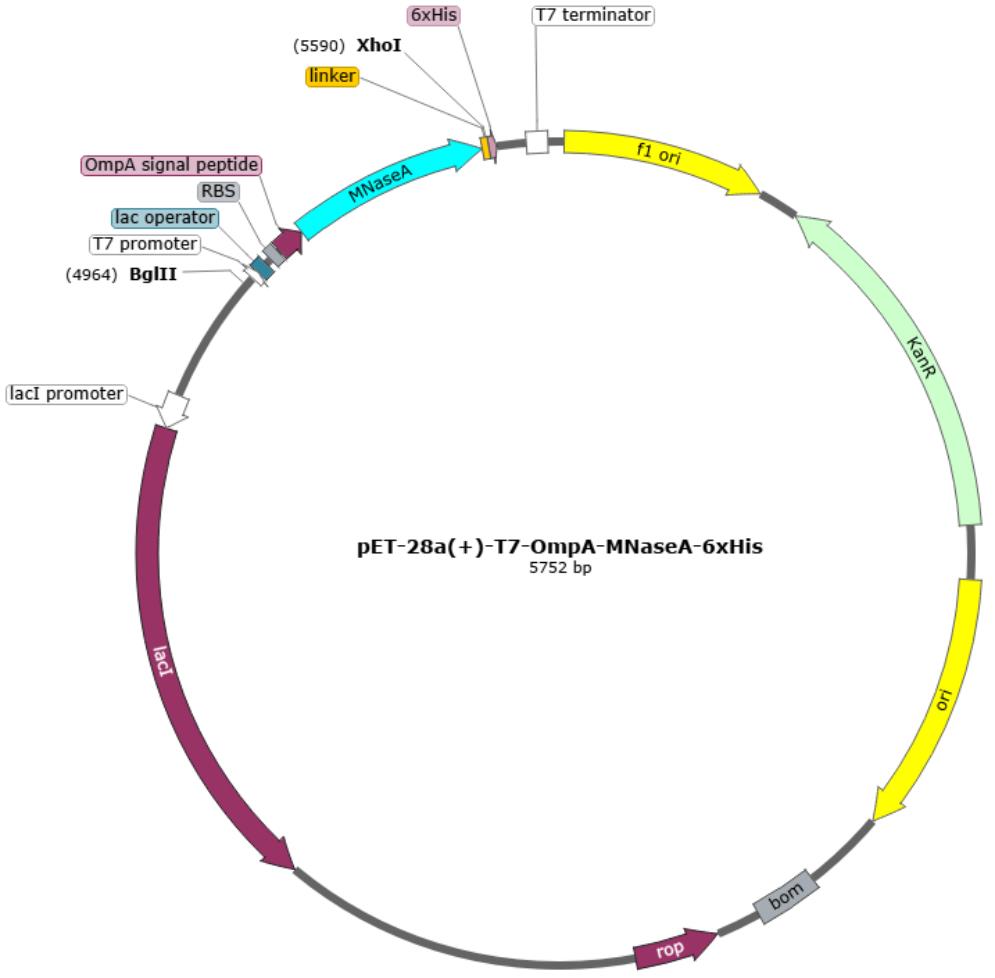
Figure 1. Plasmid map of the MNase expression vector. Modified from [11].
Reagents
1. Calcium chloride dihydrate (CaCl2·2H2O) (Thermo Scientific Chemicals, catalog number: 447325000, CAS: 10035-04-8)
2. Chloramphenicol (Fisher BioReagents, catalog number: BP904100, CAS: 56-75-7)
3. Ethylenediaminetetraacetic acid (EDTA), pure (Thermo Scientific, catalog number: 118432500, CAS: 60-00-4)
4. Glycerol (Fisher Chemicals, catalog number: G/0650/08, CAS: 56-81-5)
5. Glycine (Fisher BioReagents, catalog number: BP3811, CAS: 56-40-6)
6. HaltTM protease inhibitor cocktail, EDTA-free, 100× (Thermo Scientific, catalog number: 87785)
7. HisPurTM Ni-NTA resin (Thermo Scientific, catalog number: 88222)
8. Hydrochloric acid (HCl), 37% (Fisher Chemical, catalog number: H/1150/PB15, CAS: 7647-01-0)
9. Imidazole (Thermo Scientific Chemicals, catalog number: 122025000, CAS: 288-32-4)
10. InstantBlue® Coomassie protein gel stain (Abcam, catalog number: ISB1L)
11. Isopropyl-β-D-thiogalactopyranoside (IPTG), dioxane-free (Thermo Scientific, catalog number: R0392, CAS: 367-93-1)
12. Kanamycin sulfate (Fisher BioReagents, catalog number: BP9065, CAS: 25389-94-0)
13. L-(+)-rhamnose (98+%) (Thermo Scientific Chemicals, catalog number: A16166, CAS: 10030-85-0)
14. Laemmli sample buffer, 4× (Bio-Rad, catalog number: 1610747)
15. NaCl (Fisher Chemical, catalog number: S/3120/63, CAS: 7647-14-5)
16. Prestained or unstained protein ladder (Thermo Scientific, catalog number: 26630 or 26619)
17. Protein Assay Kit II (Bio-Rad, catalog number: 5000002)
18. Sodium hydroxide (NaOH) (Fisher Chemical, catalog number: S/4920/60, CAS: 1310-73-2)
19. Tris base (Fisher BioReagents, catalog number: BP1521, CAS: 77-86-1)
20. Tryptone (Fisher BioReagents, catalog number: BP9726500)
21. Yeast extract (Fisher BioReagents, catalog number: BP1422500)
22. Liquid nitrogen
23. Sodium dodecyl sulphate (SDS) (Fisher BioReagents, catalog number: BP166500, CAS: 151-21-3)
24. SDS-PAGE gels, 15% or 16% (e.g., Thermo Scientific, NovexTM Tris-Glycine Mini Protein Gels, 16%, 1.0 mm, XP00165BOX or equivalent hand-cast gels)
25. (optional) Nuclease S7 (MNase) (Roche, catalog number: 10107921001)
Solutions
1. Protein expression
a. 100 mM L-(+)-rhamnose (see Recipes)
b. 1 M IPTG (see recipes)
c. 50 mg/mL kanamycin (Kan) (see Recipes)
d. 35 mg/mL chloramphenicol (Cm) (see Recipes)
e. LB-Luria (see Recipes)
2. Components for purification buffers
a. 1 M imidazole (see Recipes)
b. 1 M Tris pH 7.5 (see Recipes)
c. 5 M NaCl (see Recipes)
d. 1 M CaCl2 (see Recipes)
e. 0.5 M EDTA (see Recipes)
f. 80% (v/v) glycerol (see Recipes)
3. MNase purification buffers
a. Lysis buffer (see Recipes)
b. Wash buffer (see Recipes)
c. Elution buffer (see Recipes)
d. Storage buffer (see Recipes)
4. Enzymatic activity assay
a. 100 mM CaCl2 (see Recipes)
b. 1 M Tris-HCl, pH 8.0 (see Recipes)
c. 100 mM Tris-HCl, pH 8.0 (see Recipes)
d. 10 mM Tris-HCl, pH 8.0 (see Recipes)
5. 10× Tris-Glycine-SDS running buffer (see Recipes)
Recipes
Notes:
1. When purifying the enzyme, calculate the amount of buffer needed (especially for the lysis buffer due to the cost of the Halt protease inhibitor). We also tested purification without protease inhibitors in the buffers and found that using an inhibitor only in the lysis buffer is sufficient to retain high protein quality.
2. The following recipes are the approximate amounts for MNase purification from 1 L of E. coli culture.
1. Protein expression
a. 100 mM L-(+)-rhamnose
| Reagent | Final concentration | Quantity or volume |
|---|---|---|
| L-(+)-rhamnose | 100 mM | 0.18 g |
| Ultra-pure water | n/a | up to 10 mL |
| Total | n/a | 10 mL |
Filter-sterilize (0.2 μm) and store aliquots at -20 °C for up to 1–2 years. Avoid repeated freeze-thaw cycles.
b. 1 M IPTG
| Reagent | Final concentration | Quantity or volume |
|---|---|---|
| IPTG | 1 M | 2.38 g |
| Ultra-pure water | n/a | up to 10 mL |
| Total | n/a | 10 mL |
Filter-sterilize (0.2 μm) and store aliquots at -20 °C for up to 1 year. For reproducible MNase expression, it is crucial to use the recommended brand of IPTG powder listed above.
c. 50 mg/mL Kan
| Reagent | Final concentration | Quantity or volume |
|---|---|---|
| Kanamycin sulfate | 50 mg/mL | 0.5 g |
| Ultra-pure water | n/a | up to 10 mL |
| Total | n/a | 10 mL |
Dissolve and filter-sterilize (0.2 μm). Store aliquots at -20 °C for up to 1 year. Avoid repeated freeze-thaw cycles.
d. 35 mg/mL Cm
| Reagent | Final concentration | Quantity or volume |
|---|---|---|
| Chloramphenicol | 35 mg/mL | 0.35 g |
| 99.9% ethanol | 99.9% | 10 mL |
| Total | n/a | 10 mL |
Dissolve and store aliquots at -20 °C for up to 1 year. Avoid repeated freeze-thaw cycles.
e. LB-Luria
| Reagent | Final concentration | Quantity or volume |
|---|---|---|
| NaCl | 0.5 g/L | 0.5 g |
| Yeast extract | 5 g/L | 5 g |
| Tryptone | 10 g/L | 10 g |
| Ultra-pure water | n/a | up to 1 L |
| Total | n/a | 1 L |
Dissolve all components, adjust to the final volume, and filter-sterilize (0.2 μm). Store at room temperature.
Note: We noticed that the MNase processing during expression in E. coli Lemo21(DE3) is improved when the medium is filter sterilized (0.2 μm) rather than autoclaved.
2. Components for purification buffers
a. 1 M imidazole
| Reagent | Final concentration | Quantity or volume |
|---|---|---|
| Imidazole | 1 M | 6.8 g |
| Ultra-pure water | n/a | up to 100 mL |
| Total | n/a | 100 mL |
Dissolve and filter-sterilize (0.2 μm). Store at 4 °C in a dark bottle for up to 2 years.
b. 1 M Tris-HCl, pH 7.5
| Reagent | Final concentration | Quantity or volume |
|---|---|---|
| Tris base | 1 M | 12.11 g |
| Ultra-pure water | n/a | up to 100 mL |
| Total | n/a | 100 mL |
Dissolve Tris base in ~70 mL of ultra-pure water. Once dissolved, adjust pH to 7.5 by adding HCl (concentrated or slightly diluted). Fill to final volume with ultra-pure water and filter-sterilize (0.2 μm). Store at room temperature for up to 1 year.
c. 5 M NaCl
| Reagent | Final concentration | Quantity or volume |
|---|---|---|
| NaCl | 5 M | 29.22 g |
| Ultra-pure water | n/a | up to 100 mL |
| Total | n/a | 100 mL |
Dissolve and filter-sterilize (0.2 μm). Store at room temperature indefinitely.
d. 1 M CaCl2
| Reagent | Final concentration | Quantity or volume |
|---|---|---|
| CaCl2·2H2O | 1 M | 14.70 g |
| Ultra-pure water | n/a | up to 100 mL |
| Total | n/a | 100 mL |
Dissolve and filter-sterilize (0.2 μm). Store at room temperature indefinitely.
e. 0.5 M EDTA
| Reagent | Final concentration | Quantity or volume |
|---|---|---|
| EDTA | 0.5 M | 14.61 g |
| Ultra-pure water | n/a | up to 100 mL |
| Total | n/a | 100 mL |
EDTA does not dissolve below pH 8.0. To prepare a 0.5 M EDTA solution, add the weighted amount of EDTA to ~70 mL of ultra-pure water and dissolve it by slowly adding either NaOH pellets (approximately 3–4 g/100 mL) or 5 M NaOH solution. Fill to the final volume with ultra-pure water and filter-sterilize (0.2 μm). Store at room temperature for several years.
f. 80% (v/v) glycerol
| Reagent | Final concentration | Quantity or volume |
|---|---|---|
| Glycerol | 80% | 80 mL |
| Ultra-pure water | n/a | up to 100 mL |
| Total | n/a | 100 mL |
Autoclave the solution and store it at room temperature for several years.
3. MNase purification buffers
Note: All purification buffers can be prepared one day in advance (without protein inhibitors) and kept at 4 °C. Never use buffers older than 1 week old. Always add inhibitors (100× Halt protease inhibitor, etc.) immediately prior to use.
a. Lysis buffer
| Reagent | Final concentration | Volume |
|---|---|---|
| 1 M CaCl2 | 1 mM | 0.050 mL |
| 5 M NaCl | 250 mM | 2.5 mL |
| 1 M Tris-HCl, pH 7.5 | 50 mM | 2.5 mL |
| 1 M imidazole | 5 mM | 0.250 mL |
| 80% (v/v) glycerol | 5% (v/v) | 3.125 mL |
| 100× Halt protease inhibitor | 0.5× | 0.250 mL |
| Ultra-pure water | n/a | up to 50 mL |
| Total | n/a | 50 mL |
Prepare freshly just before using. Store at 4 °C. Add 100× Halt inhibitor just before use.
b. Wash buffer
| Reagent | Final concentration | Volume |
|---|---|---|
| 5 M NaCl | 250 mM | 5 mL |
| 1 M Tris-HCl, pH 7.5 | 50 mM | 5 mL |
| 1 M imidazole | 20 mM | 2 mL |
| 80% glycerol | 5% (v/v) | 6.25 mL |
| Ultra-pure water | n/a | up to 100 mL |
| Total | n/a | 100 mL |
Store at 4 °C for up to 1 week.
c. Elution buffer
| Reagent | Final concentration | Volume |
|---|---|---|
| 5 NaCl | 250 mM | 2.5 mL |
| 1 M Tris-HCl, pH 7.5 | 50 mM | 2.5 mL |
| 1 M imidazole | 250 mM | 12.5 mL |
| 80% (v/v) glycerol | 5% (v/v) | 3.125 mL |
| Ultra-pure water | n/a | up to 50 mL |
| Total | n/a | 50 mL |
Store at 4 °C for up to 1 week.
d. Storage buffer
| Reagent | Final concentration | Volume |
|---|---|---|
| 5 M NaCl | 50 mM | 1 mL |
| 0.5 M EDTA | 1 mM | 0.2 mL |
| 1 M Tris-HCl, pH 7.5 | 50 mM | 5 mL |
| 80% glycerol | 5% | 6.25 mL |
| Ultra-pure water | n/a | up to 100 mL |
| Total | n/a | 100 mL |
Store at 4 °C for up to 1 week.
4. Enzymatic activity assay
a. 100 mM CaCl2
Dilute from 1 M CaCl2 by mixing 5 mL of 1 M solution and 45 mL of sterile ultra-pure water. Store at room temperature for up to 1 year.
b. 1 M Tris-HCl, pH 8.0
| Reagent | Final concentration | Quantity or volume |
|---|---|---|
| Tris base | 1 M | 12.11 g |
| Ultra-pure water | n/a | up to 100 mL |
| Total | n/a | 100 mL |
Dissolve Tris base in ~70 mL of ultra-pure water. Once dissolved, adjust pH to 8.0 by adding HCl (concentrated or slightly diluted). Fill to the final volume with ultra-pure water and filter-sterilize (0.2 μm). Store at room temperature for up to 1 year.
c. 100 mM Tris-HCl, pH 8.0 (50 mL)
Dilute from 1 M Tris-HCl, pH 8.0, by mixing 5 mL of 1 M solution and 45 mL of sterile ultra-pure water. Store at room temperature for up to 1 year.
d. 10 mM Tris-HCl, pH 8.0 (50 mL)
Dilute from 100 mM Tris-HCl, pH 8.0, by mixing 5 mL of 1 M solution and 45 mL of sterile ultra-pure water. Store at room temperature for up to 1 year.
5. 10× Tris-Glycine-SDS running buffer
| Reagent | Final concentration | Quantity or volume |
|---|---|---|
| Tris base | 0.25 M | 30.3 g |
| Glycine | 1.92 M | 144 g |
| SDS | 1% | 10 g |
| Ultra-pure water | n/a | Up to 1 L |
| Total | n/a | 1 L |
Prepare a 10× stock solution by dissolving the components in ~800 mL of ultra-pure water. Once dissolved, adjust to the final volume. Prepare 1× working buffer before use by diluting with ultra-pure water.
Laboratory supplies
1. 1.5 mL microcentrifuge tubes (Fisher Scientific, catalog number: 11926955 or equivalent)
2. 50 mL screw-cap centrifuge tubes (Sarstedt, catalog number: 62.547.254 or equivalent)
3. 15 mL screw-cap centrifuge tubes (Sarstedt, catalog number: 62.554.001 or equivalent)
4. 0.5–10 μL pipette tips (Fisher Scientific, catalog number: 11913426 or equivalent)
5. 5–300 μL pipette tips (Fisher Scientific, catalog number: 11903456 or equivalent)
6. 100–1,250 μL pipette tips (Fisher Scientific, catalog number: 10492725 or equivalent)
7. 25 mL serological pipettes (Sarstedt, catalog number: 86.1685.001 or equivalent)
8. 10 mL serological pipettes (Sarstedt, catalog number: 86.1254.001 or equivalent)
9. 96-well UV-transparent microplates (Corning, catalog number: 3635)
10. PierceTM centrifuge columns (Thermo Scientific, catalog number: 89898)
11. Amicon® Ultra Centrifugal Filter, 10 kDa MWCO (Merck Millipore, catalog number: UFC901024)
12. Nunc 96-well microplate (Thermo Scientific, catalog number: 260836, or equivalent compatible with colorimetric measurements)
13. Bottle top or syringe filters, 0.2 μm (Fisher Scientific, catalog number: 15973307 or 15206869 or equivalent)
14. Disposable cuvettes semi-micro (VWR, catalog number: 634-0676)
15. Cultivation flasks for E. coli culturing, e.g., 100 mL, 250 mL, and 5 L (any)
16. Petri dishes (any)
17. Sterile inoculation loops (any)
18. Glass bottles, beakers, and volumetric flasks for buffer and media preparation (any)
Equipment
1. Tube revolver rotator (Thermo Scientific, catalog number: 88881001)
2. Cryogenic mixer mill or sonicator (Retsch, model: MM400; or Hielscher Ultrasonics, model: UP400S)
3. Multiscan FC microplate photometer with wavelength 450/595 nm (ThermoFisher Scientific, catalog number: 1410101)
4. Superspeed Centrifuge Sorvall, model LYNX 4000 (Thermo Scientific, catalog number: 75008590)
5. Fiberlite F12-6 × 500 fixed angle rotor (Thermo Scientific, catalog number: 096-062375)
6. Centrifugation bottles for F12 rotor (Thermo Scientific, catalog number: 3141-0500PK)
7. Temperature-controlled UV-plate reader (PerkinElmer, model: EnSpire or equivalent)
8. Stripettor® Pro Pipet Controller (Corning, catalog number: 4999 or equivalent)
9. Adjustable volume pipettes 1–10 μL (Fisher Scientific, catalog number: 11835762 or equivalent)
10. Adjustable volume pipettes 10–100 μL (Fisher Scientific, catalog number: 11865762 or equivalent)
11. Adjustable volume pipettes 100–1,000 μL (Fisher Scientific, catalog number: 11885762 or equivalent)
12. Variable volume, multichannel pipettes 10–100 μL (Fisher Scientific, catalog number: 11825772 or equivalent)
13. Protein gel apparatus, e.g., Mini-PROTEAN® Tetra Vertical Electrophoresis (Bio-Rad, catalog number: 1658004 or equivalent)
14. Power supply, PowerPacTM HC High-Current Power Supply (Bio-Rad, catalog number: 1645052 or equivalent)
15. Incubator shaker New BrunswickTM Excella E25 Shaker (Eppendorf or equivalent)
16. Incubator 37 °C (any)
17. Centrifuge 5427 R with rotor FA-45-24-11 (1.5/2 mL tubes) (Eppendorf, catalog number: 5429000010 or equivalent)
18. Centrifuge 5810 R with swing-bucket rotor A-4-62 (Eppendorf, catalog number: 5811000015 or equivalent)
19. Open Air Rocker (Fisher Scientific, catalog number: 88861026 or equivalent)
20. QB Series Dry Block Heating Systems (Grant, model: QBD2 or equivalent)
21. UV-Vis spectrophotometer (any)
22. 744 pH Meter (Metrohm, model: 744 or equivalent)
23. Direct 8 Milli-Q Direct Water Purification System with filter Biopak Polisher (Merck, catalog number: CDUFBI001)
24. Balance AB104-S/PH (Mettler Toledo, catalog number: 11135020 or equivalent)
25. Diaphragm Vacuum Pump LABOPORT (KNF, type: N 810.3 FT.18 or equivalent for filter sterilization)
26. NanoDrop 2000c Spectrophotometer (Thermo Scientific, catalog number: ND-2000C or equivalent)
27. Vortexer (any)
28. Magnetic hotplate stirrer, e.g., Isotemp RT Advanced Hotplate Stirrer (Fisher Scientific, catalog number: 15326607 or equivalent)
Software and datasets
1. Prism (GraphPad Software, Version 11.0.0, requires license)
2. Excel (Microsoft Office 365, requires license, or other spreadsheet software)
Procedure
登录/注册后免费查看全文
文章信息
稿件历史记录
提交日期: Jun 10, 2026
接收日期: Aug 4, 2026
在线发布日期: Aug 24, 2026
出版日期: Sep 20, 2026
版权信息
© 2026 The Author(s); This is an open access article under the CC BY license (https://creativecommons.org/licenses/by/4.0/).
如何引用
Readers should cite both the Bio-protocol article and the original research article where this protocol was used:
- Gregorova, P., Isada, M. F., DiRuggiero, J. and Sarin, L. P. (2026). Purification of MNase for Use in Ribosomal Profiling of High-Salinity Extremophiles. Bio-protocol 16(18): e5811. DOI: 10.21769/BioProtoc.5811.
- Gregorova, P., Isada, M., DiRuggiero, J. and Sarin, L. P. (2025). Purification of micrococcal nuclease for use in ribosomal profiling of high-salinity extremophiles. J Biol Chem. 301(1): 108020. https://doi.org/10.1016/j.jbc.2024.108020

 Download Citation in RIS Format
分类
微生物学 > 异源表达系统 > 大肠杆菌
生物化学 > 蛋白质 > 表达
微生物学 > 微生物生物化学 > 蛋白质 > 分离和纯化
您对这篇实验方案有问题吗?
在此处发布您的问题,我们将邀请本文作者来回答。同时,我们会将您的问题发布到Bio-protocol Exchange,以便寻求社区成员的帮助。
 发布问题
发布问题


