


Generation of Budoids: 3D Multilineage Limb Models From Mouse Embryonic Stem Cells
肢芽类器官的构建:利用小鼠胚胎干细胞建立三维多谱系肢体模型

发布: 2026年09月05日第16卷第17期 DOI: 10.21769/BioProtoc.5808 浏览次数: 660
评审: Thirupugal GovindarajanHaixia XuAnonymous reviewer(s)
 PDF
PDF  Q&A
Q&A
参见作者原研究论文
The authors used this protocol in:
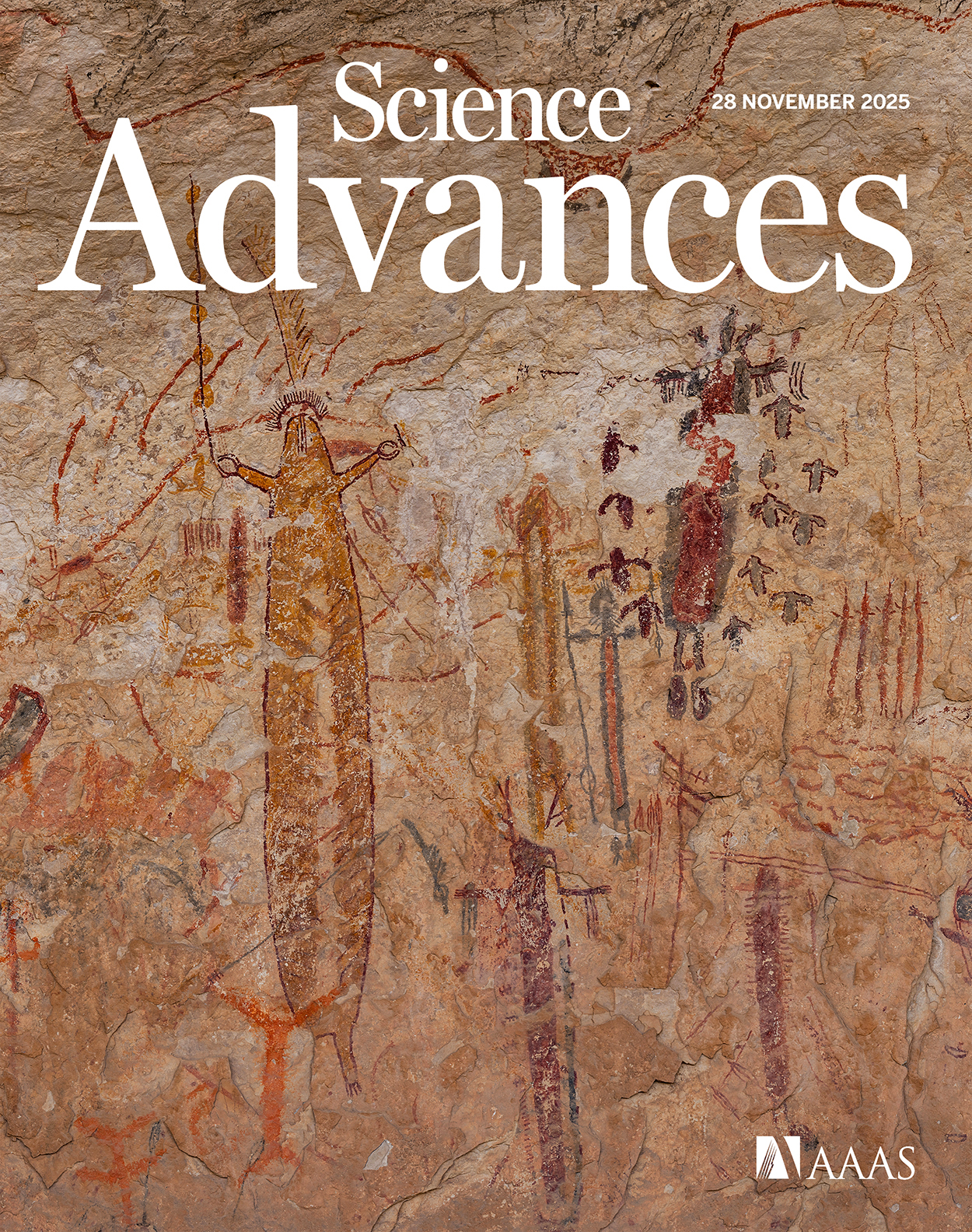
Nov 2025




Abstract
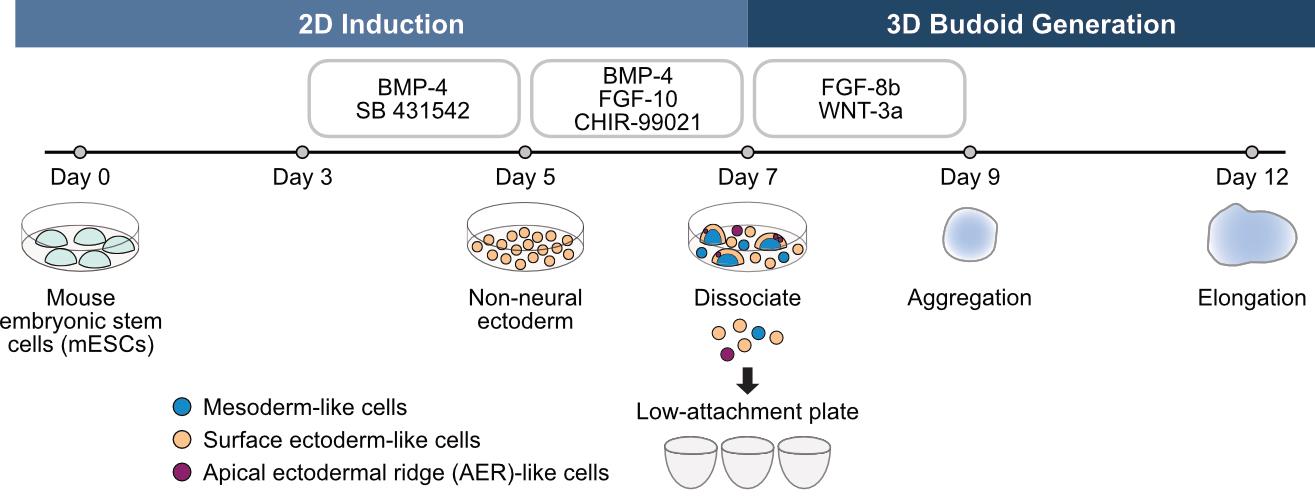
Limb development requires the coordination of multiple cell types, including the limb bud mesoderm and surface ectoderm, by the apical ectodermal ridge (AER), a specialized signaling center secreting numerous morphogens. Characterizing these cell–cell interactions is crucial for understanding limb morphogenesis, but they are challenging to study in vivo. Furthermore, existing in vitro models do not capture the multilineage complexity of the limb. We recently developed a robust 7-day differentiation protocol using mouse embryonic stem cells (mESCs) to generate heterogeneous cultures containing cells with characteristics of the limb bud mesoderm, surface ectoderm, and AER. Dissociating and reaggregating these cultures in low attachment 96-well plates forms budoids, organoids that display certain limb bud–like features. Budoids undergo chondrogenesis-mediated symmetry breaking and elongation within 5 days of culture. Altogether, our protocols have enabled the study of cell–cell interactions in limb development and provide an easily scalable model adaptable for various applications, including drug testing and congenital disorder modeling.
Key features
• Induction of heterogeneous 2D cultures containing three main cell types of the developing limb bud from mESCs.
• Free-floating budoid cultures achieve 3D morphogenesis without manual manipulation or embedding.
• Highly scalable protocol, per differentiation experiment yielding > 9× 10⁶ cells, sufficient for generating >1,000 budoids.
Keywords: Signaling centers (信号中心) Mouse embryonic stem cells (小鼠胚胎干细胞)
Small-molecule differentiation (小分子诱导分化)
Organoids (类器官)
Limb development (肢体发育)
Mouse embryonic stem cells (小鼠胚胎干细胞)
Small-molecule differentiation (小分子诱导分化)
Organoids (类器官)
Limb development (肢体发育)
Graphical overview
Background
The developing limb bud has long been used as a model for studying patterning and morphogenesis. Notably, limb morphogenesis relies on multilineage interactions between limb bud cell types, including the limb bud mesoderm, surface ectoderm, and the apical ectodermal ridge (AER) [1–3]. The AER, which forms at the distal tip of the limb bud as a thickened ectoderm [4,5], is a specialized signaling center that dynamically coordinates the proliferation and differentiation of the other limb bud cell types via various secreted morphogens [4,6–8]. Historically, the AER has been examined in model organisms via tissue-level excision and grafting experiments [3,9–11] as well as gene inactivation approaches [12–14], but its interactions remain largely uncharacterized at the cellular level. Previous in vitro limb development models [15–17] mainly focused on generating mesoderm. Therefore, new models are needed to decipher cell–cell interactions involved in limb morphogenesis.
Organoids are simplified stem cell–based models that recapitulate certain features of a given organ and development [18]. Key to their utility is the ease with which aspects of in vivo–like processes can be observed and subject to chemical, genetic, and mechanical perturbations. A mouse limb bud organoid system was previously proposed [19], yet it showed limited changes in morphology, required laborious manual processing, and lacked complete cellular characterization. To enable the study of individual limb cell populations, we established a mouse embryonic stem cell (mESC)-based differentiation protocol applicable for the mass production of cell types with limb bud mesoderm–like, surface ectoderm–like, and AER-like characteristics. By dissociating and reaggregating these cultures in U-bottom microplates, we generate organoids that provide insights into how limb bud cell types self-organize and interact to achieve morphogenesis. Moreover, our budoid protocol can be extended to limb bud cells from mouse embryos, instead of mESCs, producing in vivo–derived limb models. Thus, these organoids, termed budoids, facilitate 3D limb development modeling at an unprecedented scale. Diverse possibilities are open for future studies with our 2D induction and budoid protocols, including drug testing and congenital disorder modeling. Here, we present a detailed protocol for these methodologies.
Materials and reagents
Biological materials
1. EmbryoMax® embryonic stem cell line, strain 129/SVEV, passage 11 (Merck, catalog number: CMTI-1; RRID: CVCL_GS41)
Reagents
1. Dulbecco’s modified Eagle’s medium (DMEM), high glucose, GlutaMAXTM supplement (Gibco, catalog number: 61965026)
2. Embryonic stem cell fetal bovine serum (FBS), qualified, US origin (Gibco, catalog number: 16141079)
3. Penicillin-Streptomycin (10,000 U/mL) (Gibco, catalog number: 15140122)
4. Minimal essential medium (MEM) non-essential amino acids solution (100×) (Gibco, catalog number: 11140035)
5. Sodium pyruvate (100 mM) (Gibco, catalog number: 11360070)
6. 2-Mercaptoethanol (50 mM) (Gibco, catalog number: 31350010)
7. EmbryoMax® 0.1% gelatin solution (Merck, catalog number: ES-006-B)
8. Phosphate-buffered saline (PBS), pH 7.4 (Gibco, catalog number: 10010015)
9. Trypsin-EDTA (0.25%), phenol red (Gibco, catalog number: 25200072)
10. Bovine albumin fraction V (7.5% solution) (Gibco, catalog number: 15260037)
11. UltraPureTM DNase/RNase-free distilled water (Thermo Fisher Scientific, catalog number: 10977035)
12. LIF (in-house preparation) or human LIF, animal-free recombinant protein, PeproTech® (Gibco, catalog number: AF-300-05-25UG) (used interchangeably)
13. PD0325901 (Mirdametinib) (Selleckchem, catalog number: S1036), product format: 10 mM (1 mL in DMSO)
14. CHIR-99021 (CT99021) (ApexBio, catalog number: A3011), product format: 10 mM (in 1 mL DMSO) or GSK-3 Inhibitor XVI (Calbiochem, catalog number: 361559) (used interchangeably)
15. Glasgow’s MEM (GMEM) (Gibco, catalog number: 11710035)
16. KnockOutTM serum replacement (Gibco, catalog number: 10828010)
17. Normocin® antimicrobial reagent (InvivoGen, catalog number: ant-nr-05)
18. Human BMP-4 recombinant protein, PeproTech® (Gibco, catalog number: 120-05ET)
19. SB 431542 (ApexBio, catalog number: A8249), product format: 10 mM (1 mL in DMSO)
20. Human FGF-10, animal-free recombinant protein, PeproTech® (Gibco, catalog number: AF-100-26)
21. Human/mouse FGF-8b recombinant protein, PeproTech® (Gibco, catalog number: 100-25)
22. Mouse Wnt-3a recombinant protein, PeproTech® (Gibco, catalog number: 315-20)
23. Ethanol 70% v/v
Solutions
1. DMEM base medium (see Recipes)
2. DMEM+++ medium (see Recipes)
3. Non-neural ectoderm (NNE) medium (see Recipes)
4. Induction medium I (d3) (see Recipes)
5. Induction medium II (d5) (see Recipes)
6. Budoid generation media (d7) (see Recipes)
Recipes
See General notes 1 and 2 prior to beginning.
1. DMEM base medium
| Reagent | Final concentration | Volume (for 500 mL) |
|---|---|---|
| DMEM, high glucose, GlutaMAXTM supplement | 86.8% v/v | 434 mL |
| Embryonic stem cell FBS | 10% v/v | 50 mL |
| Penicillin-streptomycin (10,000 U/mL) | 1% v/v | 5 mL |
| MEM non-essential amino acids solution (100×) | 1× | 5 mL |
| Sodium pyruvate (100 mM) | 1 mM | 5 mL |
| 2-Mercaptoethanol (50 mM) | 0.1 mM | 1 mL |
Note: Prior to use, thaw embryonic stem cell FBS overnight at 4 °C, heat-inactivate for 30 min in a 56 °C water bath, and store in single-use aliquots at -20 °C. To prepare DMEM base medium, remove 66 mL of media from a 500 mL bottle of DMEM. Add all components and filter-sterilize the medium (e.g., with a Stericup vacuum filter). Store media at 4 °C for up to 1 month. Bring to 37 °C before use.
2. DMEM+++ medium
| Reagent | Final concentration | Volume (for 50 mL) |
|---|---|---|
| DMEM base medium | 100% v/v | 50 mL |
| Human LIF, animal-free recombinant protein (100 μg/mL) | 100 ng/mL | 50 μL |
| PD0325901 (2 mM) | 1 μM | 25 μL |
| CHIR-99021 (CT99021) (3 mM) | 3 μM | 50 μL |
Note: Prepare the medium in a 50 mL conical tube. Store at 4 °C for up to 1 week. Bring to 37 °C before use.
3. NNE medium
| Reagent | Final concentration | Volume (for 50 mL) |
|---|---|---|
| GMEM | 96% v/v | 48 mL |
| KnockOutTM serum replacement | 1.5% v/v | 750 μL |
| MEM non-essential amino acids solution (100×) | 1% v/v | 500 μL |
| Sodium pyruvate (100 mM) | 1 mM | 500 μL |
| Normocin® antimicrobial reagent | 0.2% v/v | 100 μL |
| 2-Mercaptoethanol (50 mM) | 91 μM | 91 μL |
Note: For optimal stability, protect all components from light. Prepare single-use aliquots of KnockOutTM serum replacement and Normocin and store at -20 °C to avoid freeze-thaw cycles. Store media at 4 °C for up to 1 week, protected from light. Bring to room temperature before use.
4. Induction medium I (d3)
| Reagent | Final concentration | Volume (per 12-well plate) |
|---|---|---|
| NNE medium | 100% v/v | 12.5 mL |
| Human BMP-4 recombinant protein (100 μg/mL) | 100 ng/mL | 12.5 μL |
| SB 431542 (2 mM) | 1 μM | 6.25 μL |
Note: Prepare fresh at the time of use. Make an aliquot of the desired volume of NNE in a conical tube and bring to room temperature before use, protected from light.
5. Induction medium II (d5)
| Reagent | Final concentration | Volume (per 12-well plate) |
|---|---|---|
| NNE medium | 100% v/v | 12.5 mL |
| Human BMP-4 recombinant protein (100 μg/mL) | 100 ng/mL | 12.5 μL |
| Human FGF-10, animal-free recombinant protein (100 μg/mL) | 100 ng/mL | 12.5 μL |
| CHIR-99021 (CT99021) (3 mM) | 3 μM | 12.5 μL |
Note: Prepare fresh at the time of use. Make an aliquot of the desired volume of NNE in a conical tube and bring to room temperature before use, protected from light.
6. Budoid generation media (d7)
| Reagent | Final concentration | Volume (per 60 budoids) |
|---|---|---|
| NNE medium | 100% v/v | 7 mL |
| Human/mouse FGF-8b recombinant protein (100 μg/mL) | 450 ng/mL | 31.5 μL |
| Mouse Wnt-3a recombinant protein (100 μg/mL) | 300 ng/mL | 21 μL |
Note: Prepare fresh at the time of use. Make an aliquot of the desired volume of NNE in a conical tube and bring to room temperature before use, protected from light.
Laboratory supplies
1. NuncTM cell-culture-treated multidishes (6-well plate) (Thermo Fisher Scientific, catalog number: 140675)
2. NuncTM cell-culture-treated multidishes (12-well plate) (Thermo Fisher Scientific, catalog number: 150628)
3. NunclonTM SpheraTM 96-well, Nunclon Sphera-treated, U-shaped-bottom microplate (Thermo Fisher Scientific, catalog number: 174929)
4. 1,000 μL XL graduated TipOne® filter tip (StarLab, catalog number: S1122-1830)
5. 200 μL graduated TipOne® filter tip (StarLab, catalog number: S1120-8810)
6. 20 μL beveled TipOne® filter tip (StarLab, catalog number: S1120-1810)
7. 10/20 μL XL graduated TipOne® filter tip (StarLab, catalog number: S1120-3810)
8. 200 μL TipOne® tip, yellow non-filter (StarLab, catalog number: S1111-0706)
9. 5 mL StripetteTM serological pipettes (Corning, catalog number: 4487)
10. 10 mL StripetteTM serological pipettes (Corning, catalog number: 4488)
11. 25 mL StripetteTM serological pipettes (Corning, catalog number: 4489)
12. 50 mL StripetteTM serological pipettes (Corning, catalog number: 4490)
13. CountessTM cell counting chamber slides with trypan blue solution (Thermo Fisher Scientific, catalog number: C10228)
14. Falcon® 50 mL high-clarity PP centrifuge tube (Corning, catalog number: 352070)
15. Falcon® 15 mL high-clarity PP centrifuge tube (Corning, catalog number: 352096)
16. Reaction tube, 2 mL, PP (Sarstedt, catalog number: 72.691)
17. 50 mL reagent reservoir, sterilized (Biotix, catalog number: SR-0050-5SC)
18. Pasteur pipettes without cotton plug, 2 mL, 150 mm (Carl Roth, catalog number: 4518) (for aspirator system)
19. Millipore® Stericup® quick-release vacuum filtration system (Merck, catalog number: S2GPU05RE)
20. Vented MillexTM-GV filter unit (sterile), pore size 0.22 μm (Merck, catalog number: SLGVV255F)
21. B. Braun Injekt® Luer-Lock, 2-part disposable syringe (Braun, catalog number: 4606710V) (for reconstitution)
Equipment
1. HerasafeTM KS, Class II Biological Safety Cabinet (Thermo Fisher Scientific, catalog number: 51022515)
2. HeracellTM VIOS CO2 Incubator, 165 L (Thermo Fisher Scientific, catalog number: 50145502)
3. Eppendorf® Centrifuge 5910 Ri G with Rotor S-4xUniversal (Thermo Fisher Scientific, catalog number: EP5943000106)
4. Olympus® CKX53 cell culture microscope with EP50 digital camera (Evident, catalog number: ckx53)
5. Grant InstrumentsTM SUB Aqua Pro Water Bath with heat transfer beads (Grant Instruments, catalog number: 15187025)
6. Countess® II FL Automated Cell Counter (Thermo Fisher Scientific, catalog number: AMQAF1000)
7. VACUSAFE Aspiration System (INTEGRA Biosciences, catalog number: 158320)
8. Eppendorf Research® plus, 4-pack (Eppendorf, catalog number: 3123000950)
9. Eppendorf Research® plus Move It® (Eppendorf, catalog number: 3125000176)
10. Eppendorf® Easypet® 3 Electronic Pipette Controller (Eppendorf, catalog number: 4430000018)
11. Refrigerator (4 °C)
12. Freezer (-20 °C)
Software and datasets
1. (Optional) Machine learning–based Organoids Analysis (MOrgAna; [20], v0.2.0, 2024), available for free as a GitHub repository at https://github.com/LabTrivedi/MOrgAna.git
Procedure
登录/注册后免费查看全文
文章信息
稿件历史记录
提交日期: Jun 24, 2026
接收日期: Jul 28, 2026
在线发布日期: Aug 18, 2026
出版日期: Sep 5, 2026
版权信息
© 2026 The Author(s); This is an open access article under the CC BY license (https://creativecommons.org/licenses/by/4.0/).
如何引用
Readers should cite both the Bio-protocol article and the original research article where this protocol was used:
- Hu, K. and Aztekin, C. (2026). Generation of Budoids: 3D Multilineage Limb Models From Mouse Embryonic Stem Cells. Bio-protocol 16(17): e5808. DOI: 10.21769/BioProtoc.5808.
- Skoufa, E., Zhong, J., Hu, K., Kahre, O., Tsissios, G., Carrau, L., Herrera, A., Dominguez Mantes, A., Leleu, M., Castilla-Ibeas, A., et al. (2025). Specialized signaling centers direct cell fate and spatial organization in a mesodermal organoid model. Sci Adv. 11(48): eady7682. https://doi.org/10.1126/sciadv.ady7682

 Download Citation in RIS Format
分类
干细胞 > 类器官培养
干细胞 > 胚胎干细胞 > 细胞分化
发育生物学 > 形态建成 > 器官形成
您对这篇实验方案有问题吗?
在此处发布您的问题,我们将邀请本文作者来回答。同时,我们会将您的问题发布到Bio-protocol Exchange,以便寻求社区成员的帮助。
 发布问题
发布问题


