


ChromID: A Protocol for Mapping Protein Chromatin Interactions in Living Cells
ChromID:活细胞中蛋白质—染色质相互作用图谱的绘制方法

(*Contributed equally to this work, §Technical contact: richicardoso.silva@gmail.com; douwe.tb@gmail.com) 发布: 2026年09月05日第16卷第17期 DOI: 10.21769/BioProtoc.5807 浏览次数: 571
评审: Hemant Kumar PrajapatiPriyanka MittalAnonymous reviewer(s)
 PDF
PDF  Q&A
Q&A
参见作者原研究论文
The authors used this protocol in:

May 2026




Abstract
Chromatin modifications regulate genome function by recruiting proteins that control transcription, genome organization, and DNA repair. Identifying the proteins associated with specific chromatin modifications is therefore essential for understanding how these regulatory processes operate. Traditional approaches, including chromatin immunoprecipitation and affinity purification coupled to mass spectrometry, have uncovered many chromatin-associated proteins. However, they often rely on crosslinking and chromatin fragmentation, which can disrupt native chromatin architecture and limit the detection of transient interactions. Here, we describe a proximity-labeling protocol for identifying the chromatin-dependent protein interactome associated with specific chromatin marks, termed ChromID. ChromID uses engineered chromatin readers (eCRs) fused to a promiscuous biotin ligase, which labels proteins in the immediate vicinity of the targeted chromatin mark. The protocol includes in vivo biotin labeling, nuclear extract preparation, streptavidin-based enrichment, and tryptic digestion for downstream LC-MS/MS analysis. The protocol has been validated across multiple cell types and chromatin contexts and can be extended to other chromatin-associated proteins, providing a versatile approach to profile chromatin-associated proteomes within their native cellular environment.
Key features
• Maps proteins associated with different chromatin modifications in living cells using engineered chromatin readers fused to TurboID, BASU, or other promiscuous biotin ligases.
• Preserves native chromatin organization and captures transient chromatin-associated interactions that are often lost during conventional affinity purification workflows.
• Validated across multiple chromatin contexts, including histone modifications, DNA methylation, transcription factors, RNA polymerase II, and DNA damage-associated chromatin states.
• Applicable to diverse cell types and organisms and adaptable to other chromatin-associated proteins, including transcription factors and chromatin regulators.
Keywords: ChromID (ChromID) Biotin proximity labeling (生物素邻近标记)
Engineered chromatin readers (工程化染色质阅读蛋白)
Chromatin modification interactome (染色质修饰互作组)
LC-MS/MS proteomics (液相色谱-串联质谱蛋白质组学)
Histone post-translational modifications (组蛋白翻译后修饰)
Biotin proximity labeling (生物素邻近标记)
Engineered chromatin readers (工程化染色质阅读蛋白)
Chromatin modification interactome (染色质修饰互作组)
LC-MS/MS proteomics (液相色谱-串联质谱蛋白质组学)
Histone post-translational modifications (组蛋白翻译后修饰)
Graphical overview
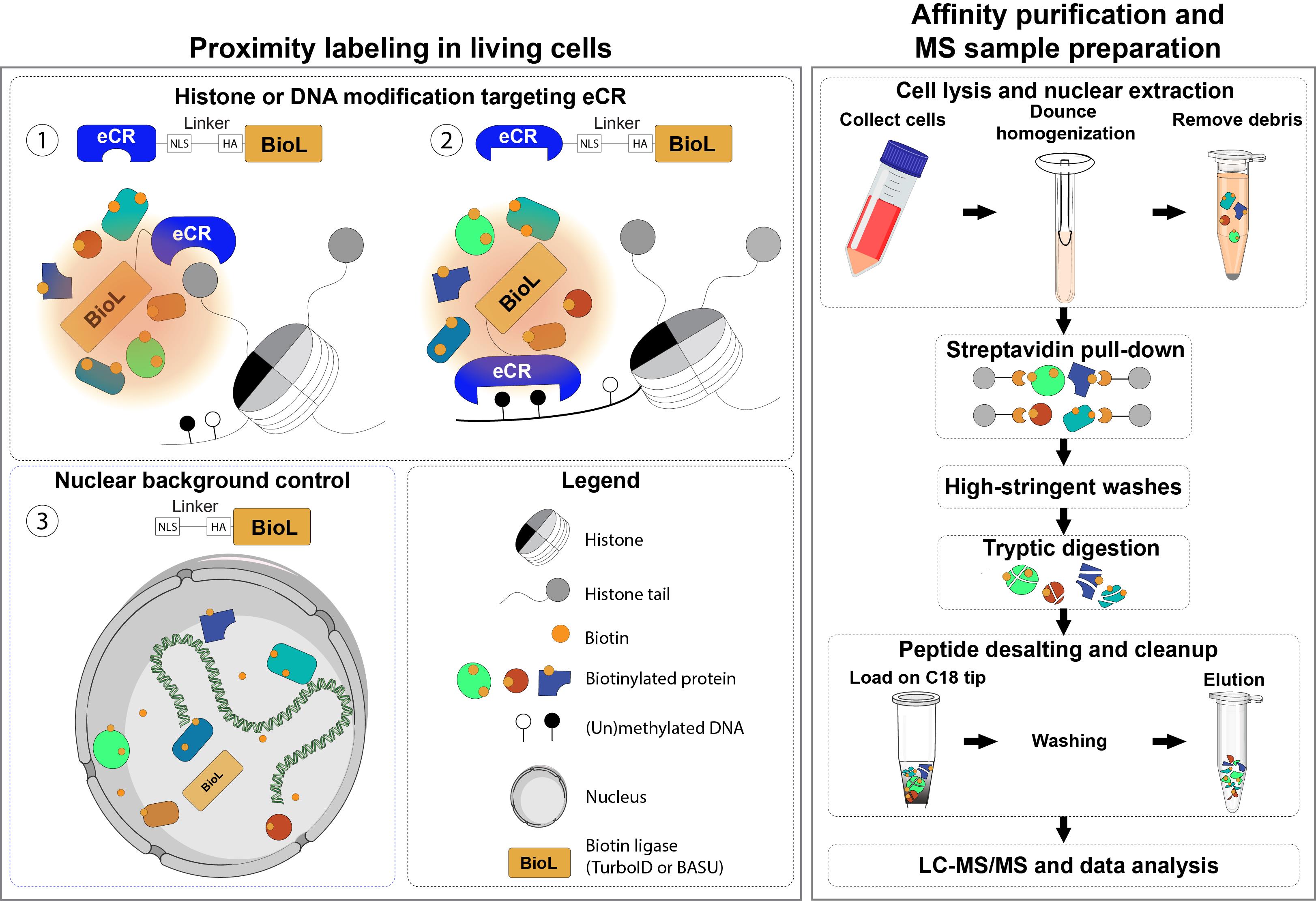
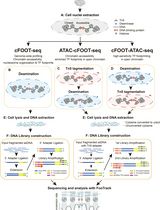
Graphical overview of the ChromID protocol, where engineered chromatin readers (eCRs), fused to promiscuous biotin ligases, target specific chromatin modifications, including histone and DNA modifications, and label proximal proteins for identification by liquid chromatography–tandem mass spectrometry (LC-MS/MS). The figure is intended as a schematic representation of the workflow and does not depict a specific eCR. Representative eCRs are summarized in Supplementary Table 1. Nuclear BioL, without the reader, is used as the background control.
Background
Chromatin modifications, including histone post-translational modifications and DNA methylation, are central regulators of genome function and cellular identity. These modifications serve as molecular signals that are recognized by chromatin-associated effector proteins, often referred to as chromatin readers. These readers interpret local chromatin states to coordinate diverse biological processes, including RNA transcription, DNA replication, and repair [1]. Mapping the protein networks associated with specific chromatin modifications is therefore critical for understanding how epigenetic states are established, maintained, and remodeled during development and disease.
Several biochemical and proteomic strategies have been developed to characterize chromatin-associated protein complexes, including co-immunoprecipitation, affinity purification coupled to mass spectrometry, histone peptide and nucleosome pull-downs, and chromatin immunoprecipitation-based methods (reviewed in [2]). These approaches have provided important insights, but they share key limitations. They generally do not preserve the surrounding chromatin environment needed to capture context-dependent binding and often rely on chromatin fragmentation, crosslinking, affinity purification, or in vitro reconstitution. Such steps can disrupt native chromatin organization and cause the loss of transient interactions. Furthermore, antibody-based methods can be constrained by potential epitope blocking and nonspecific binding.
Proximity biotinylation has emerged as a powerful alternative for mapping protein interaction networks directly in living cells [3]. In this approach, promiscuous biotin ligases such as Bacillus subtilis BirA (BASU) or TurboID are fused to a bait protein, allowing covalent biotinylation of nearby proteins once biotin is added. Because labeling happens in intact cells before lysis, proximity biotinylation captures protein interactions in their native cellular environment, including the transient and low-affinity interactions often lost during conventional purification. Covalent biotin labeling also allows stringent washing protocols, resulting in reduced nonspecific background and improved reproducibility.
ChromID builds on this strategy by using the binding affinity of naturally occurring chromatin reader domains as modular building blocks to generate engineered chromatin readers (eCRs). Depending on the selected reader domain, eCRs can be engineered to recognize specific histone post-translational modifications and DNA modifications.
When fused to a promiscuous biotin ligase such as BASU or TurboID and stably expressed in cells, ChromID enables the identification of chromatin-associated protein networks directly in living cells. For example, DNA modification-targeting eCRs incorporate methyl-CpG-binding domains that selectively recognize 5-methylcytosine (5mC), enabling the characterization of proteins associated with methylated DNA in living cells. ChromID has also been used to profile protein networks associated with H3K4me3, H3K9me3, H3K27me3 and bivalent promoters marked by H3K4me3, and H3K27me3 [4]. The modular design of eCRs has also enabled mapping of protein networks associated with γH2AX-marked DNA damage sites [5] and actively elongating RNA polymerase II phosphorylated at serine 2 [6]. Representative examples of histone- and DNA modification-targeting eCRs and their applications are summarized in Supplementary Table 1.
Here, we describe a detailed ChromID sample preparation workflow covering biotin labeling, nuclear extract preparation, streptavidin affinity purification under stringent conditions, and tryptic digestion to produce high-quality peptides ready for LC-MS/MS analysis (Graphical overview). Like other proximity-labeling approaches, ChromID relies on the stability, proper chromatin localization, and efficient activity of the eCR-biotin ligase fusion protein, all of which should be experimentally validated prior to proteomic analysis. The workflow has been validated across multiple biological contexts, including mouse embryonic stem cells (mESCs), neural progenitor cells (NPCs), and human osteosarcoma cells (U2OS) in different cell cycle stages and under multiple genotoxic conditions. Furthermore, this protocol can be applied to any chromatin-associated protein of interest, including transcription factors [7] and other chromatin regulators, extending its applicability across diverse applications in chromatin biology, epigenetics, and beyond.
Materials and reagents
Biological materials
Cell line of interest stably expressing engineered chromatin readers (eCRs) fused to BASU or TurboID. For example:
1. Mouse embryonic stem cells stably expressing eCRs fused to BASU or TurboID. Detailed protocols for the generation and validation of these cell lines are available under the Validation of protocol section and in [4,6].
2. Mouse embryonic stem cells stably expressing BASU or TurboID carrying a nuclear localization signal (NLS). Detailed protocols for the generation and validation of these cell lines are available in [4,6]. This cell line is used for background normalization.
3. U2OS stably expressing eCRs fused to TurboID. Detailed protocols for the generation and validation of these cell lines are available in [5].
4. U2OS stably expressing TurboID carrying an NLS. Detailed protocols for the generation and validation of these cell lines are available in [5]. This cell line is used for background normalization.
Note: All plasmids used to generate these cell lines are available at Addgene: https://www.addgene.org/Tuncay_Baubec/.
Reagents
1. Acetonitrile (ACN), LC-MS grade (Supelco, catalog number: 1.00029.1000)
2. Benzonase (Merck, catalog number: 71206)
3. Chloroacetamide (CAA) (Sigma-Aldrich, catalog number: C0267)
4. D-Biotin (Thermo Fisher Scientific, catalog number: B20656)
5. Dulbecco’s phosphate-buffered saline (DPBS) solution (VWR, catalog number: 392-0434)
6. DTT solution 1 M (Merck, catalog number: 43816-10ML)
7. EDTA disodium salt (EDTA) (Sigma-Aldrich, catalog number: ED2SS)
8. Formic acid (FA), MS grade (Merck, catalog number: 5.33002.0050)
9. Glycerol (Merck, catalog number: 356350)
10. HEPES (Sigma-Aldrich, CAS number: 7365-45-9)
11. Hydrochloric acid (HCl) (Supelco, catalog number: 1.00317)
12. IGEPAL CA-630 (IGEPAL) (Sigma-Aldrich, CAS number: 9002-93-1)
13. Lithium chloride (LiCl) (Sigma-Aldrich, CAS number: 7447-41-8)
14. Magnesium chloride hexahydrate (MgCl2) (Sigma-Aldrich, catalog number: M2670)
15. Methanol, LC-MS grade (Thermo Scientific, catalog number: 47192)
16. Potassium chloride (KCl) (Sigma-Aldrich, CAS number: 7447-40-7)
17. Protease inhibitor complex, cOmplete, EDTA-free (PIC) (Roche, catalog number: 0505648900)
18. Sodium chloride (NaCl) (Sigma-Aldrich, CAS number: 7647-14-5)
19. Sodium deoxycholate (NaDOC) (Sigma-Aldrich, CAS number: 302-95-4)
20. Sodium dodecyl sulfate (SDS) (Sigma-Aldrich, CAS number: 151-21-3)
21. Sodium hydroxide (NaOH) (Honeywell, CAS number: 1310-73-2)
22. Trifluoroacetic acid (TFA), MS-grade (Biosolve, catalog number: 202341)
23. Tris-base (Sigma-Aldrich, CAS number: 77-86-1)
24. Triton X-100 (Sigma-Aldrich, CAS number: 1003339794)
25. Trypsin, MS grade (Promega, catalog number: V5113)
26. Urea (Cytiva, CAS number: 17-1319-01)
27. Water, LC-MS compatible (Merck, catalog number: 1153331000)
Solutions
1. 500 mM HEPES pH 7.5 stock (see Recipes)
2. 1 M Tris pH 7.5 stock (see Recipes)
3. 1 M Tris pH 8.0 stock (see Recipes)
4. 1 M KCl stock (see Recipes)
5. 5 M NaCl stock (see Recipes)
6. 500 mM EDTA stock (see Recipes)
7. 500 mM MgCl2 stock (see Recipes)
8. 1 M LiCl stock (see Recipes)
9. 100× protease inhibitor complex (PIC) stock (see Recipes)
10. 10% SDS stock (see Recipes)
11. 5% NaDOC stock (see Recipes)
12. 500 mM chloroacetamide stock (see Recipes)
13. 0.1 μg/μL trypsin stock (see Recipes)
14. Tris-EDTA (TE) pH 8 buffer (see Recipes)
15. 2% SDS in TE stock (see Recipes)
16. 10% TFA solution (see Recipes)
17. 10% IGEPAL solution (see Recipes)
18. Nuclear extraction buffer 1 (NEB1) (see Recipes)
19. Nuclear extraction buffer 2, no-salt (NEB2-NS) (see Recipes)
20. Nuclear extraction buffer 2, 450 mM-salt (NEB2-450) (see Recipes)
21. Immuno-precipitation buffer (IPB) (see Recipes)
22. Deoxycholate buffer (DOC) (see Recipes)
23. High-salt buffer (HSB) (see Recipes)
24. RIPA buffer (see Recipes)
25. Urea elution buffer (see Recipes)
26. Spin Tip buffer A (see Recipes)
27. Spin Tip buffer B (see Recipes)
Recipes
1. 500 mM HEPES pH 7.5 stock
To approximately 400 mL of Milli-Q water (MQ), add 59.58 g of HEPES and stir until dissolved. Adjust pH to 7.5 with NaOH, then bring to a final volume of 500 mL with MQ. Store at room temperature (RT) for ~1 year.
2. 1 M Tris pH 7.5 stock
To approximately 400 mL of MQ, add 60.57 g of Tris-base and stir until dissolved. Adjust pH to 7.5 with HCl, then bring to a final volume of 500 mL with MQ. Store at RT for ~1 year.
3. 1 M Tris pH 8.0 stock
To approximately 400 mL of MQ, add 60.57 g of Tris-base and stir until dissolved. Adjust pH to 8.0 with HCl, then bring to a final volume of 500 mL with MQ. Store at RT for ~1 year.
4. 1 M KCl stock
To approximately 400 mL of MQ, add 37.28 g of KCl and stir until dissolved. Bring to a final volume of 500 mL with MQ. Store at RT for ~1 year.
5. 5 M NaCl stock
To approximately 400 mL of MQ, add 146.10 g of NaCl and stir until dissolved. Bring to a final volume of 500 mL with MQ. Store at RT for ~1 year.
6. 500 mM EDTA stock
To approximately 400 mL of MQ, add 93.06 g of EDTA and stir until dissolved. Adjust pH to 8.0 with NaOH to improve the solubility of EDTA, then bring to a final volume of 500 mL with MQ. Store at RT for ~1 year.
7. 500 mM MgCl2 stock
To approximately 400 mL of MQ, add 50.83 g of MgCl2 and stir until dissolved. Bring to a final volume of 500 mL with MQ. Store at RT for ~1 year.
8. 1 M LiCl stock
To approximately 400 mL of MQ, add 21.20 g of LiCl and stir until dissolved. Bring to a final volume of 500 mL with MQ. Store at RT for ~1 year.
9. 100× PIC stock
Dissolve 10 tablets of protease inhibitor complex in 5 mL of MQ for a final 100× stock. Aliquot in 0.5 mL and store at -20 °C to increase lifespan (~1 year). Aliquots can be thawed 2–3 times.
10. 10% SDS stock
To approximately 80 mL of MQ, add 10.0 g of SDS and stir until dissolved. Then bring to a final volume of 100 mL with MQ. Store at RT for ~1 year. This solution might precipitate below RT.
11. 5% NaDOC stock
To approximately 40 mL of MQ, add 2.5 g of NaDOC and stir until dissolved. Adjust to 50 mL with MQ. Store at RT and protected from light. Lifespan ~1 year.
12. 500 mM chloroacetamide stock
To approximately 1.75 mL of MQ, add 93.5 mg of chloroacetamide and shake until dissolved. Adjust to 2 mL with MQ. Aliquot in 0.1 mL and store at -20 °C in the dark. Lifespan ~6 months. Avoid reusing thawed aliquots.
13. 0.1 μg/μL trypsin stock
Trypsin (V5113) contains two reagents: 0.5 μg/μL trypsin (V511C) and trypsin resuspension dilution buffer (V542A). Thaw both reagents from -80 °C. Dilute trypsin to 0.1 μg/μL with the resuspension buffer. Make 0.1 mL aliquots and store at -80 °C. Avoid freeze-thaw cycles; aliquots can be used ~3 times.
14. TE pH 8 buffer
Mix 5 mL of 1 M Tris stock with 1 mL of 500 mM EDTA, pH 8, and bring to a final volume of 500 mL with MQ. Store at RT for ~1 year.
15. 2% SDS in TE stock
To approximately 200 mL of TE pH 8.0, add 5.0 g of SDS and stir until dissolved. Gentle heating at 37 °C may help with dissolution. Bring to a final volume of 250 mL with TE pH 8.0. Store at RT for ~1 year. Might precipitate below RT. Before usage add 1 M DTT to a final concentration of 1 mM. This working solution can be used for 1 day.
16. 10% TFA solution
Dilute 200 μL of TFA with 1,800 μL of MQ. Prepare this stock solution fresh on the day of usage, as it is highly light-sensitive.
17. 10% IGEPAL solution
Dilute 1 mL of IGEPAL with 9 mL of MQ. Store the solution at RT for ~1 year.
18. NEB1
| Reagent | Final concentration | Quantity or volume |
|---|---|---|
| 500 mM HEPES pH 7.5 stock | 10 mM | 5 mL |
| 1 M KCl stock | 10 mM | 2.5 mL |
| 500 mM EDTA stock | 1 mM | 500 μL |
| 500 mM MgCl2 stock | 1.5 mM | 750 μL |
| 1 M DTT | 1 mM | Add fresh* |
| 100× PIC stock | 1× | Add fresh* |
| MQ Water | n/a | To 250 mL |
| Total | n/a | 250 mL |
Note: Store stock solution (250 mL) without DTT and PIC at 4 °C for 1 year. On the day of use, freshly add DTT and the PIC to the final working concentration. Keep this working solution at 4 °C, which can be used for 1 day.
19. NEB2-NS
| Reagent | Final concentration | Quantity or volume |
|---|---|---|
| 500 mM HEPES pH 7.5 stock | 20 mM | 10 mL |
| Glycerol | 20% (v/v) | 50 mL |
| 500 mM EDTA stock | 0.2 mM | 100 μL |
| 500 mM MgCl2 stock | 1.5 mM | 750 μL |
| 1 M DTT | 1 mM | Add fresh* |
| 100× PIC stock | 1× | Add fresh* |
| MQ | n/a | To 250 mL |
| Total | n/a | 250 mL |
Note: Store stock solution (250 mL) without DTT and PIC at 4 °C for 1 year. On the day of use, freshly add DTT and PIC to the final working concentration. Keep this working solution at 4 °C, which can be used for 1 day.
20. NEB2-450
| Reagent | Final concentration | Quantity or volume |
|---|---|---|
| 500 mM HEPES pH 7.5 stock | 20 mM | 10 mL |
| Glycerol | 20% (v/v) | 50 mL |
| 500 mM EDTA stock | 0.2 mM | 100 μL |
| 500 mM MgCl2 stock | 1.5 mM | 750 μL |
| 5 M NaCl stock | 450 mM | 22.5 mL |
| 1 M DTT | 1 mM | Add fresh* |
| 100× PIC stock | 1× | Add fresh* |
| MQ | n/a | To 250 mL |
| Total | n/a | 250 mL |
Note: Store stock solution (250 mL) without DTT and PIC at 4 °C for 1 year. On the day of use, freshly add DTT and PIC to the final working concentration. Keep this working solution at 4 °C, which can be used for 1 day.
21. IPB
| Reagent | Final concentration | Quantity or volume |
|---|---|---|
| 500 mM HEPES pH 7.5 stock | 20 mM | 10 mL |
| Glycerol | 20% (v/v) | 50 mL |
| IGEPAL | 0.3% (v/v) | 750 μL |
| 500 mM EDTA stock | 0.2 mM | 100 μL |
| 500 mM MgCl2 stock | 1.5 mM | 750 μL |
| 5 M NaCl stock | 150 mM | 7.5 mL |
| 1 M DTT | 1 mM | Add fresh* |
| 100× PIC stock | 1× | Add fresh* |
| MQ | n/a | To 250 mL |
| Total | n/a | 250 mL |
Note: Store stock solution (250 mL) without DTT and PIC at 4 °C for 1 year. On the day of use, freshly add DTT and PIC to the final working concentration. Keep this working solution at 4 °C, which can be used for 1 day.
22. DOC
| Reagent | Final concentration | Quantity or volume |
|---|---|---|
| 1 M LiCl stock | 250 mM | 50 mL |
| 1 M Tris pH 8.0 stock | 10 mM | 2.5 mL |
| IGEPAL | 0.5% (v/v) | 1.250 mL |
| 5% NaDOC stock | 0.5% (w/v) | 25 mL |
| 500 mM EDTA stock | 1 mM | 100 μL |
| 1 M DTT | 1 mM | Add fresh* |
| 100× PIC stock | 1× | Add fresh* |
| MQ | n/a | To 250 mL |
| Total | n/a | 250 mL |
Note: Store stock solution (250 mL) without DTT and PIC at 4 °C for 1 year in the dark. On the day of use, freshly add DTT and PIC to the final working concentration. Keep this working solution at 4 °C, which can be used for 1 day.
23. HSB
| Reagent | Final concentration | Quantity or volume |
|---|---|---|
| 500 mM HEPES pH 7.5 stock | 50 mM | 25 mL |
| 500 mM EDTA stock | 1 mM | 500 μL |
| Triton X-100 | 1% (v/v) | 2.5 mL |
| 5% NaDOC stock | 0.1% (w/v) | 5 mL |
| 10% SDS stock | 0.1% (w/v) | 2.5 mL |
| 5 M NaCl stock | 500 mM | 25 mL |
| 1 M DTT | 1 mM | Add fresh* |
| 100× PIC stock | 1× | Add fresh* |
| MQ | n/a | To 250 mL |
| Total | n/a | 250 mL |
Note: Store stock solution (250 mL) without DTT and PIC at 4 °C for 1 year in the dark. On the day of use, freshly add DTT and PIC to the final working concentration. Keep this working solution at 4 °C, which can be used for 1 day.
24. RIPA buffer
| Reagent | Final concentration | Quantity or volume |
|---|---|---|
| 1 M Tris pH 7.5 stock | 25 mM | 6.25 mL |
| 5 M NaCl stock | 150 mM | 7.5 mL |
| IGEPAL | 1% (v/v) | 2.5 mL |
| 5% NaDOC stock | 0.1% (w/v) | 5 mL |
| 10% SDS stock | 0.1% (w/v) | 2.5 mL |
| 1 M DTT | 1 mM | Add fresh* |
| 100× PIC stock | 1× | Add fresh* |
| MQ | n/a | To 250 mL |
| Total | n/a | 250 mL |
Note: Store stock solution (250 mL) without DTT and PIC at 4 °C for 1 year in the dark. On the day of use, freshly add DTT and PIC to the final working concentration. Keep this working solution at 4 °C, which can be used for 1 day.
25. Urea elution buffer
| Reagent | Final concentration | Quantity or volume |
|---|---|---|
| 1 M Tris pH 8.0 stock | 100 mM | 1 mL |
| Urea | 2 M | 1.2 g |
| 1 M DTT | 10 mM | 100 μL |
| Total | n/a | 10 mL |
Note: Prepare this solution fresh immediately before use. To minimize contamination, use urea dedicated exclusively to MS sample preparation.
26. Spin Tip buffer A
| Reagent | Final concentration | Quantity or volume |
|---|---|---|
| MS-grade formic acid (100% v/v) | 0.1% (v/v) | 10 μL |
| Water, LC-MS compatible | n/a | 9,990 μL |
| Total | n/a | 10 mL |
Note: Prepare this solution fresh immediately before use.
27. Spin Tip buffer B
| Reagent | Final concentration | Quantity or volume |
|---|---|---|
| MS-grade acetonitrile | 80% (v/v) | 8 mL |
| MS-grade formic acid | 0.1% (v/v) | 10 μL |
| Water, LC-MS compatible | n/a | 1,990 μL |
| Total | n/a | 10 mL |
Note: Prepare this solution fresh immediately before use.
Laboratory supplies
1. Streptavidin Sepharose high-performance beads (Cytiva, catalog number: 17511301)
2. Safe-Lock tubes 1.5 mL (Eppendorf, catalog number: 0030120086)
3. Safe-Lock tubes 2 mL (Eppendorf, catalog number: 0030120094)
4. Conical tube 15 mL (Sarstedt, catalog number: 62.554.502)
5. Conical tube 50 mL (Sarstedt, catalog number: 62.547.254)
6. C18 Spin tips (Pierce, catalog number: 87784)
7. 20 μL pipette tips (Sarstedt, catalog number: 703.020.100)
8. 200 μL pipette tips (Sarstedt, catalog number: 703.030.100)
9. 1,250 μL pipette tips (Sarstedt, catalog number: 703.060.100)
10. Nitrile gloves (VWR, catalog number: 112-4196)
11. BD Microlance 26G needle (BD, catalog number: 303800)
12. pH indicator strips, MQuant (Supelco, catalog number: 1.09535.0001)
13. Combitips advanced, 0.5 mL (Eppendorf, catalog number: 0030089782)
14. Low protein binding tubes 1.5 mL (Thermo Scientific, catalog number: 90410)
15. Qubit Broad Range Protein assay (Thermo Scientific, catalog number: Q33211)
16. Cell scraper (VWR, catalog number: 734-2604)
17. Cell culture plates 15 cm (MLS, catalog number: Y93150)
18. α-Lamin-B1 antibody (Santa Cruz Biotechnology, catalog number: sc-6216)
19. High-sensitivity Streptavidin-HRP (Thermo Scientific, catalog number: 21130)
20. Streptavidin-Alexa Fluor 790 (Thermo Scientific, catalog number: S11378)
Equipment
1. Eppendorf ThermoMixer C (Eppendorf, catalog number: 5382000015)
2. Centrifuge (Eppendorf, model: 5425 R)
3. Centrifuge (Eppendorf, model: 5810 R)
4. Multi-rotator (Grant instruments, model: PTR-35)
5. Ultra-low temperature freezer (Eppendorf, model: F570 series)
6. Vacuum centrifuge, Savant Speedvac (Thermo Scientific, model: DNA1300)
7. Research Plus pipettes (0.1–2.5 μL) (Eppendorf, catalog number: 3123000217)
8. Research Plus pipettes (2–20 μL) (Eppendorf, catalog number: 3123000292)
9. Research Plus pipettes (20–200 μL) (Eppendorf, catalog number: 3123000250)
10. Research Plus pipettes (100–1,000 μL) (Eppendorf, catalog number: 3123000268)
11. Qubit 3.0 Fluorometer (Thermo Scientific, catalog number: Q33216)
12. Kimble Dounce tissue grinder set (2 mL) (Sigma-Aldrich, catalog number: D8938-1SET)
13. Cell counter (Bio-Rad, model: TC20)
14. Cold room (4 °C) or refrigerator (Liebherr, model: GKv 6410 ProfiLine)
15. Tabletop vortexer (Scientific Industries, model: Vortex-Genie 2)
16. UHPLC (Thermo Scientific, model: UltiMate 3000 UHPLC system)
17. Mass spectrometer (Thermo Scientific, model: Orbitrap Exploris 480)
18. Milli-Q water purification system (Millipore, model: Integral 3)
Software and datasets
Note: All software listed is freely available.
1. MaxQuant (Max Planck Institute of Biochemistry, version 1.6.2.6) includes the integrated Andromeda search engine; source: https://www.maxquant.org [8,9]
2. Perseus (Max Planck Institute of Biochemistry, version 1.6.14.0); source: https://www.maxquant.net/perseus [10]
3. PTXQC (open-source R package, version 1.0 or later), used for LC-MS/MS quality control; source: https://github.com/cbielow/PTXQC [11]
4. R (R Foundation for Statistical Computing, version 4.3.0 or later), open source (GPL license), used for quality control and data visualization; source: https://www.r-project.org
5. Reference proteomes can be downloaded from https://www.uniprot.org/proteomes; manually annotated contaminants, or the amino acid sequences of the fusion construct, including the biotin ligase, can be included in the file if necessary
6. Proteomics raw data, lists of samples, and MaxQuant parameter (mqpar.xml) files associated with this protocol are deposited in PRIDE, https://www.ebi.ac.uk/pride/archive?keyword=baubec, under the accession numbers PXD014483 and PXD034918 or BioStudies, www.ebi.ac.uk/biostudies, under the accession number S-SCDT-10_1038-S44318-026-00768-2; relevant scripts can be found at https://github.com/BaubecLab/Setd2/tree/main/chromID
Procedure
登录/注册后免费查看全文
文章信息
稿件历史记录
提交日期: Jun 17, 2026
接收日期: Jul 28, 2026
在线发布日期: Aug 14, 2026
出版日期: Sep 5, 2026
版权信息
© 2026 The Author(s); This is an open access article under the CC BY license (https://creativecommons.org/licenses/by/4.0/).
如何引用
Cardoso da Silva, R., ten Bulte, D. and Baubec, T. (2026). ChromID: A Protocol for Mapping Protein Chromatin Interactions in Living Cells. Bio-protocol 16(17): e5807. DOI: 10.21769/BioProtoc.5807.

 Download Citation in RIS Format
分类
生物化学 > 蛋白质 > 相互作用 > 蛋白质-DNA相互作用
分子生物学 > DNA > DNA-蛋白质相互作用
系统生物学 > 蛋白质组学 > 细胞核
您对这篇实验方案有问题吗?
在此处发布您的问题,我们将邀请本文作者来回答。同时,我们会将您的问题发布到Bio-protocol Exchange,以便寻求社区成员的帮助。
 发布问题
发布问题


