


Identification of DNA-Binding Factor Enrichment in Chromatin Accessibility Data to Define a Persister Cell Signature
通过染色质可及性数据中的 DNA 结合因子富集分析界定持留细胞特征

发布: 2026年08月20日第16卷第16期 DOI: 10.21769/BioProtoc.5800 浏览次数: 492
评审: Guohao HanAnonymous reviewer(s)
 PDF
PDF  Q&A
Q&A
参见作者原研究论文
The authors used this protocol in:
Jan 2026




Abstract
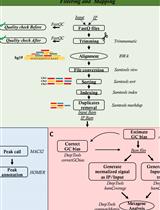
Chemotherapy-resistant persister cells are a major driver of cancer recurrence, yet their epigenetic basis remains poorly characterized. This protocol describes a computational pipeline for identifying DNA-binding factors (DBFs) that are enriched in accessible chromatin that collectively define a persister cell signature (PCS). Starting from single-nucleus ATAC-seq (snATAC-seq) data processed through the 10x Genomics CellRanger ARC pipeline, this protocol covers (1) the creation of a Seurat/Signac object with ATAC peaks, (2) the optional integration of DNA-binding data from the ReMap2022 database as a per-cell chromatin module assay, (3) differential accessibility analysis across clinically defined comparison groups, and (4) identifying and defining the top enriched DBFs as the PCS. This approach is applicable to any snATAC-seq dataset in which cells can be grouped by clinical response, treatment status, or resistance phenotype.
Key features
• Integrated analysis of chromatin accessibility data with publicly available DNA-binding data is a useful technique to identify potential epigenetic biomarkers.
• Single-nucleus ATAC-seq from clinically relevant samples can be used to identify binding enrichment of specific DNA-binding factors in sub-populations of cells.
• This protocol was used to identify a persister cell signature that was able to predict chemotherapy resistance in high-grade serous ovarian cancer.
Keywords: Chromatin accessibility (染色质可及性) Multiome (多组学)
snATAC-seq (snATAC-seq)
ChIP-seq (ChIP-seq)
CUT&RUN (CUT&RUN)
Single cell (单细胞)
Epigenomics (表观基因组学)
Multiome (多组学)
snATAC-seq (snATAC-seq)
ChIP-seq (ChIP-seq)
CUT&RUN (CUT&RUN)
Single cell (单细胞)
Epigenomics (表观基因组学)
Background
Understanding the molecular mechanisms that drive cancer initiation, progression, and therapeutic resistance is crucial for devising effective therapies for cancer treatment. In addition to the genetic drivers of cancer, such as somatic mutations, copy number variations, and genomic instability, new research has shown epigenetic mechanisms as potential drivers of cancer progression and therapeutic resistance [1–3]. These epigenetic features modulate transcriptional programs and cellular functions through a variety of mechanisms without modifying the underlying DNA sequence. Underlying these epigenetic mechanisms is ultimately the binding of transcription factors (TF) and chromatin remodelers at specific non-coding regions of the DNA known as regulatory elements. These elements, such as promoters, enhancers, or silencers, regulate gene expression when engaged by specific TFs [4]. Using chromatin accessibility [5] to infer TF binding at these regulatory regions allows for a more comprehensive understanding of expression regulation.
The single-nucleus assay for transposase-accessible chromatin by sequencing (snATAC-seq) [5,6] performs high-throughput profiling of chromatin accessibility at single-cell resolution, allowing us to identify cell-specific epigenetic patterns. By combining this information with publicly available ChIP-seq and CUT&RUN data for currently available DNA-binding factors (DBFs) (TFs and chromatin regulators) [7], we can predict the enrichment of potential binding events of each factor in any given cell using in silico methods such as ChromVAR [8] and ReMapEnrich. This approach allows us to characterize unique epigenetic signatures that link chromatin accessibility to DBFs, enabling the discovery of key transcription factors or chromatin regulators as targetable epigenetic biomarkers [9,10].
In our study aimed at characterizing the chromatin landscape and transcriptional features of drug-tolerant persister cells in high-grade serous ovarian cancer (HGSOC), we performed single-nucleus multiomic profiling (snRNA+snATAC seq) of treatment-naïve and neoadjuvant chemotherapy (NACT)-treated tissues from patients with HGSOC [11]. By comparing the open-chromatin signatures between the treatment-naïve patients who later developed resistance to adjuvant chemotherapy and the NACT-treated patients, we identified a distinct epigenetic signature of persister cells that distinguished the chemotherapy response in treatment-naïve tumors.
In this paper, we describe the computational protocol that was developed to identify this persister cell signature using chromatin accessibility data from snATAC-seq. The protocol starts with snATAC-seq data and a database of DNA-binding information (ChIP-seq/CUT&RUN data) formatted as a four-column BED file. We used data downloaded from ReMap 2022 for this purpose. We assume that the snATAC-seq count matrices from all the samples in the cohort are already merged/pooled and that the cell types are previously identified and included as a metadata table. In the current example of HGSOC, we have three specific groupings of samples. First, the samples are grouped as naïve and NACT. The naïve group is further subdivided into two groups: sensitive and resistant. The snATAC-seq data is initially processed using Signac [12–14] with TF-IDF normalization and singular value decomposition for dimensionality reduction. We then incorporate two different methods to combine DNA-binding information with snATAC-seq data. The first method uses ChromVAR to calculate the enrichment score (bias-corrected deviation score) for each DBF and for each cell. These scores can be used to calculate differential enrichment between any two groups of cells. In the second method, we use ReMapEnrich to calculate the ranked enrichment of DBFs in a single set of open-chromatin regions. This method is specifically used on the open-chromatin regions that were simultaneously up-regulated in the naïve-resistant cohort and in the NACT cohort (both comparisons using the naïve-sensitive cohort as control), to define the persister cell signature. We believe that the protocol will serve as guidance for researchers interested in multimodal analysis of snATAC-seq data in combination with a database of DNA-binding data, such as ChIP-seq or CUT&RUN. In addition, we also describe using gene expression data from snRNA-seq to filter DBFs that are lowly expressed in the cell population of interest.
Software and datasets
| Type | Software/dataset/resource | Version | Date | License | Access (free or paid) |
|---|---|---|---|---|---|
| Data | ReMap2022 non-redundant peaks BED file | 4 | 2022 | CC BY-NC 4.0 | Free; https://remap.univ-amu.fr/download_page |
| Software | R | v4.5.2 | 2025 | GPL | Free; https://www.r-project.org/ |
| Software | Seurat | v5.4.0 | 2025 | MIT | Free; https://satijalab.org/seurat/ |
| Software | Signac | v1.16.0 | 2025 | MIT | Free; https://stuartlab.org/signac/ |
| Software | BPCells | v0.3.1 | 2025 | MIT | Free; https://github.com/bnprks/BPCells |
| Software | chromVAR | v1.32.0 | 2025 | MIT | Free: https://github.com/GreenleafLab/chromVAR |
| Software | ReMapEnrich | v0.99.0 | 2026 | MIT | Free: https://github.com/remap-cisreg/ReMapEnrich |
| Software | ggplot2 | v4.0.3 | 2026 | MIT | Free |
| Software | bedtools | v2.31.0 | 2023 | GPL | Free https://bedtools.readthedocs.io/en/latest/ |
Procedure
登录/注册后免费查看全文
文章信息
稿件历史记录
提交日期: May 18, 2026
接收日期: Jul 16, 2026
在线发布日期: Aug 6, 2026
出版日期: Aug 20, 2026
版权信息
© 2026 The Author(s); This is an open access article under the CC BY license (https://creativecommons.org/licenses/by/4.0/).
如何引用
Ajay, V., Dumbrava, M. G., Gaspar-Maia, A. and Mohammed Ismail, W. (2026). Identification of DNA-Binding Factor Enrichment in Chromatin Accessibility Data to Define a Persister Cell Signature. Bio-protocol 16(16): e5800. DOI: 10.21769/BioProtoc.5800.

 Download Citation in RIS Format
分类
生物信息学与计算生物学
系统生物学 > 表观基因组学 > 染色质结构
分子生物学 > DNA > 染色质可接近性
您对这篇实验方案有问题吗?
在此处发布您的问题,我们将邀请本文作者来回答。同时,我们会将您的问题发布到Bio-protocol Exchange,以便寻求社区成员的帮助。
 发布问题
发布问题


