


DepStep: An Efficient One-Step rRNA Depletion Workflow for RNA Sequencing in Non-model Organisms
DepStep:非模式生物RNA测序的一步式高效rRNA去除流程

(§Technical contact: muhammad.qasim@helsinki.fi) 发布: 2026年08月05日第16卷第15期 DOI: 10.21769/BioProtoc.5764 浏览次数: 289
评审: Willy R Carrasquel-UrsulaezAnonymous reviewer(s)
 PDF
PDF  Q&A
Q&A
Advertisement





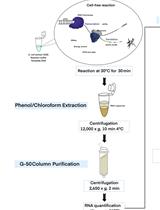
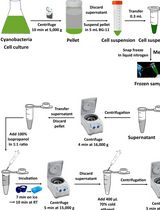
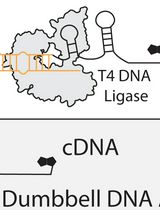
Abstract
RNA sequencing (RNA-seq) has revolutionized transcriptomics, ribosome footprinting, and polysome profiling, providing a wealth of data. Many RNA-based omics typically remove ribosomal RNA (rRNA) or select for messenger RNA (mRNA) prior to sequencing, thereby enriching reads that map to the translationally active part of the transcriptome. Prokaryotic mRNA lacks the 3′ polyadenylated tail, which excludes the use of poly(A)-based selection methods. While commercial rRNA depletion products exist for prokaryotes, their proprietary nature and potential inefficiency with non-model organisms are factors that may limit broad-scale application. To mitigate this issue, we designed DepStep, a consolidated workflow for one-step rRNA depletion using species-specific biotinylated antisense probes for selective hybridization and removal of the target rRNA molecules. As a proof-of-concept, RNA-seq libraries of the psychrophilic gram-negative bacterium Shewanella glacialimarina TZS-4T were prepared using both DepStep and a commercial rRNA depletion kit for gram-negative bacteria, to which DepStep was benchmarked. DepStep compares favorably to the commercial depletion kit; it removes >98.6% of the rRNA content in the sample, resulting in sequencing libraries where the coding DNA sequence (CDS) reads account for >80% of the total read count. Importantly, DepStep’s cost-per-sample is three times lower than the commercial kit, establishing DepStep as a simple yet cost-effective alternative to commercial solutions.
Key features
• DepStep is a comprehensive workflow for one-step rRNA depletion in non-model species.
• Guidelines for design and implementation of specific biotinylated antisense probes.
• Compares favorably in benchmarking to commercial products.
• Alternative for budget-conscious labs with 3× lower cost-per-sample.
Keywords: Transcriptomics (转录组学) RNA sequencing (RNA测序)
rRNA depletion (rRNA去除)
Bacteria (细菌)
Shewanella glacialimarina TZS-4T (冰海希瓦氏菌 TZS-4ᵀ)
RNA sequencing (RNA测序)
rRNA depletion (rRNA去除)
Bacteria (细菌)
Shewanella glacialimarina TZS-4T (冰海希瓦氏菌 TZS-4ᵀ)
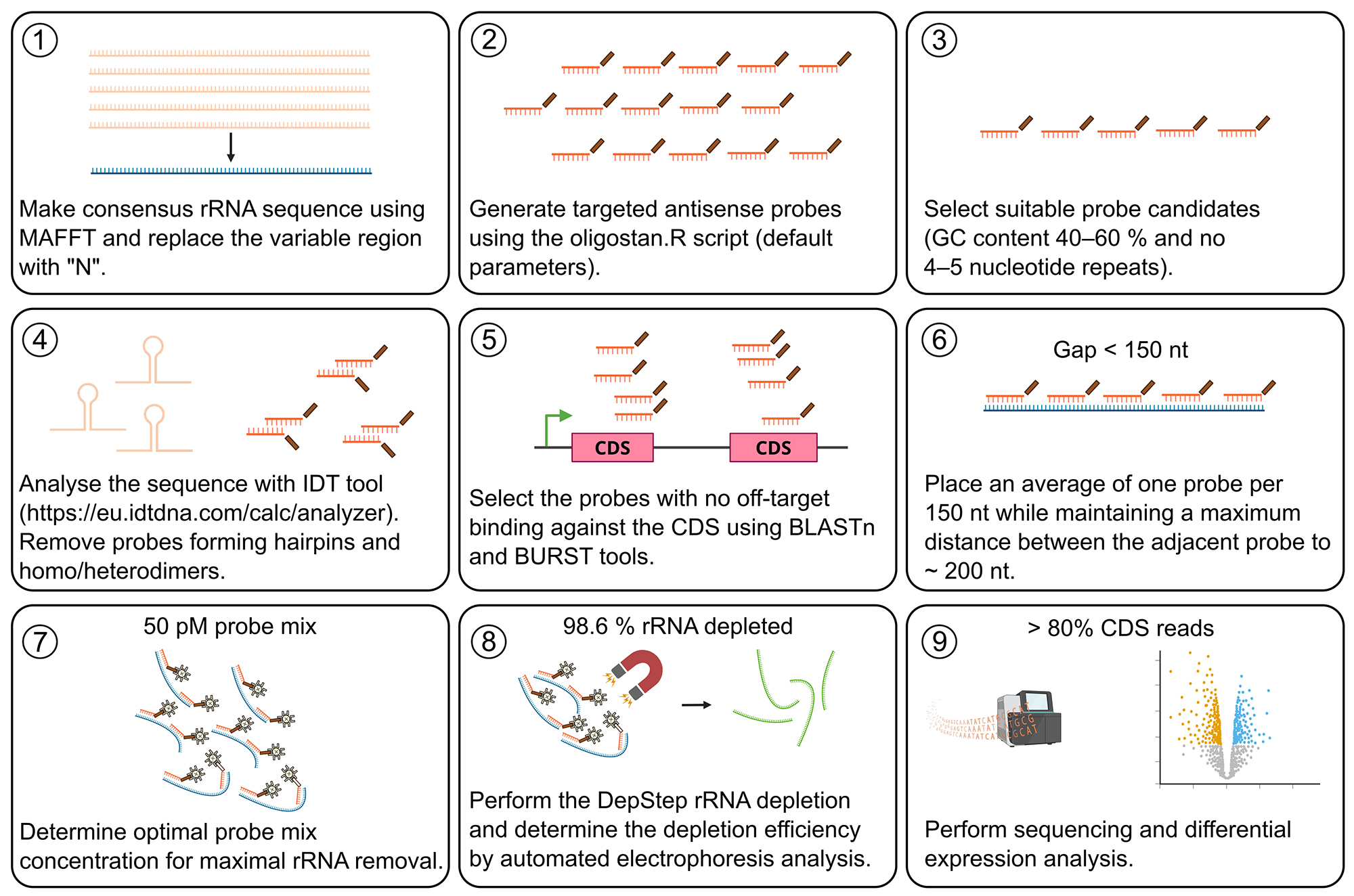
Graphical overview
Background
RNA sequencing (RNA-seq) has become a pivotal tool for generating comprehensive transcriptional profiles and uncovering mechanistic insights into various biological processes [1,2]. However, a significant challenge in RNA-seq is the overwhelming presence of ribosomal RNA (rRNA), which constitutes ~80% of the total RNA in both prokaryotes and eukaryotes [3,4]. This abundance of rRNA can obscure the detection of messenger RNA (mRNA) during sequencing, thereby skewing the transcriptomic data and limiting the insights that can be derived from protein-coding sequences. In eukaryotes, this issue is often circumvented by poly(A) enrichment, a technique that selectively isolates polyadenylated mRNA for sequencing [5]. However, this approach is not applicable to prokaryotes, as most prokaryotic mRNAs lack polyadenylation. Hence, rRNA must be effectively removed from the total RNA to allow accurate quantification of mRNA transcripts.
To achieve this, the preferred option is to rely on commercial rRNA depletion methods, which are available from numerous vendors, particularly when working with established model organisms. On the other hand, commercial kits may be less efficient with non-model organisms, as their depletion strategies might not be as effective in removing rRNA from lesser-studied prokaryotes. Consequently, customized solutions may be needed to remove rRNA, including (i) depletion using rRNA-specific biotinylated probes coupled to streptavidin beads [6–8], (ii) targeted degradation of rRNA–DNA hybrids using RNase H treatment [9], (iii) specific cDNA synthesis from mRNA using non-random primers that do not prime reverse transcription of rRNA molecules [10], (iv) enrichment of mRNA by blocking the amplification of rRNA [11], and depletion of cDNA reads matching rRNA using (v) Taq polymerase endonuclease activity [12] or (vi) Cas9-mediated degradation [13]. While these methods have been successfully used to enhance the capture of mRNA and enable quantitative analysis of mRNA transcripts, they are often laborious to implement, requiring rigorous testing before optimal performance is achieved.
Drawing from these strategies, here we present a simplified one-step rRNA depletion method—DepStep—that utilizes biotinylated antisense rRNA probes linked to streptavidin-coated magnetic beads. Using the non-model bacterium Shewanella glacialimarina TZS-4T as proof-of-concept, we designed species-specific rRNA antisense probes and systematically optimized the depletion conditions, removing >98.6% of rRNA molecules without biasing the mRNA and non-coding RNA contents. The subsequent sequencing libraries yielded coding DNA sequence (CDS) reads accounting for >80% of the total read count. To evaluate the effectiveness of our approach, we compared our in-house method to a commercially available rRNA depletion kit that is compatible with our non-model organism. We demonstrate that DepStep offers similar depletion as the commercial kit, with mRNA reads from both methods showing a positive Pearson correlation (r = 0.82). Importantly, we noticed that uniform probe coverage throughout the rRNA molecule is critical for its effective removal, and maintaining a maximum distance of less than 200 nt between adjacent probes resulted in optimal depletion efficiency. Moreover, DepStep can be adapted to generate biotinylated probes for other organisms, facilitating studies on transcriptional regulation across different species. However, its applicability to other organisms may require species-specific optimization. By employing DepStep, we enhanced the detection of mRNA transcripts and increased the overall reads coverage across the CDS region in S. glacialimarina. Consequently, DepStep provides a consolidated workflow for generating custom probes, offering an efficient and cost-effective solution for rRNA removal.
Materials and reagents
Biological material
1. Shewanella glacialimarina TZS-4T (DSM 115441, HAMBI 3773) [14,15]
Reagents
Buffers, acids, and bases
1. Tris base [Tris(hydroxymethyl)aminomethane] (Thermo Fisher Scientific, catalog number: BP152-1)
2. Boric acid (Thermo Fisher Scientific, catalog number: B/3800/60)
3. Acidic phenol pH 5.3 (Sigma-Aldrich, catalog number: P4682)
4. MOPS (Thermo Fisher Scientific, catalog number: BP308-100)
5. Ethylenediaminetetraacetic acid (EDTA) (Thermo Fisher Scientific, catalog number: 118432500)
6. Hydrochloric acid (HCl) for pH adjustment (any)
7. Sodium hydroxide (NaOH) for pH adjustment (any)
8. Acetic acid (glacial) (Thermo Fisher Scientific, catalog number: A/0360/PB17)
Salts
9. Sodium chloride (NaCl) (Thermo Fisher Scientific, catalog number: S/3120/63)
10. Sodium citrate (Thermo Fisher Scientific, catalog number: BP327-500)
11. Sodium acetate (Thermo Fisher Scientific, catalog number: S/2080/53)
12. Sodium dodecyl sulfate (Thermo Fisher Scientific, catalog number: BP166-500)
13. Guanidine thiocyanate (Thermo Fisher Scientific, catalog number: BP221-1)
14. Ammonium thiocyanate (Thermo Fisher Scientific, catalog number: A/6640/53)
15. Ammonium persulfate (Thermo Fisher Scientific, catalog number: 327081000)
Organic compounds and solvents
16. 99.6% EtOH, AA grade (Anora Group Oyj, catalog number: 1025874)
17. 1-bromo-3-chloropropane (BCP) (Acros Organics, catalog number: 106860010)
18. Tween 20 (Thermo Fisher Scientific, catalog number: BP337-500)
19. Formamide (Thermo Fisher Scientific, catalog number: BP228-100)
20. Ficoll 400 (Thermo Fisher Scientific, catalog number: BP525-100)
21. Polyvinylpyrrolidone (Sigma-Aldrich, catalog number: 81420-100G)
22. Formaldehyde (Thermo Fisher Scientific, catalog number: BP531-500)
23. Tetramethylethylenediamine (Thermo Fisher Scientific, catalog number: BP150-20)
24. Glycerol, 99%, analytical reagent grade (Thermo Fisher Scientific, catalog number: G/0650/08)
25. Formaldehyde (Thermo Fisher Scientific, catalog number: BP531-500)
26. Urea (Thermo Fisher Scientific, catalog number: 197460050)
Media components
27. Peptone (Sigma-Aldrich, catalog number: 91249-500G)
28. Yeast extract (Thermo Fisher Scientific, catalog number: BP1422-500)
29. Marine broth powder (BD Difco, catalog number: 279110)
30. Agar (Neogen, catalog number: NCM0238A)
Colorimetric reagents and dyes
31. Xylene cyanol FF (Thermo Fisher Scientific, catalog number: BP565-10)
32. Bromophenol blue (Thermo Fisher Scientific, catalog number: BP115-25)
Enzymes
33. RNasin Plus ribonuclease inhibitor (Promega, catalog number: N2615)
Probes
34. Biotinylated rRNA-targeting probes, custom synthesis by Metabion (see Supplementary Table S1 for sequences)
Gel electrophoresis
35. Agarose (Thermo Fisher Scientific, catalog number: BP160-100) gel 2%, TAE buffering system for RNA
36. Formaldehyde agarose (Thermo Fisher Scientific, catalog number: BP160-100) gel, 1.5%, MOPS buffering system for RNA
37. Urea polyacrylamide (Thermo Fisher Scientific, catalog number: BP1406-1) gel, 6%, TBE buffering system for RNA
38. Urea polyacrylamide (Thermo Fisher Scientific, catalog number: BP1406-1) gel, 15%, TBE buffering system for RNA
39. Invitrogen SYBR Gold Nucleic Acid Gel Stain (10,000× concentrate in DMSO) (Thermo Fisher Scientific, catalog number: S11494)
40. Midori Green (Nippon Genetics, catalog number: MG04)
41. GeneRuler 1 kb DNA ladder (Thermo Fisher Scientific, catalog number: SM0311)
Protein solution
42. Bovine serum albumin (Thermo Fisher Scientific, catalog number: 268130100)
Blocking of nylon membrane
43. UltraPure Salmon Sperm DNA solution (Invitrogen, catalog number: 15632-011)
Solutions
1. 25% rich marine broth (rMB) media (see Recipes)
2. 2 M NaOH solution (see Recipes)
3. 1 M Tris-HCl pH 7.5 and 8.0 (100 mL) (see Recipes)
4. 0.5 M EDTA pH 7.5 and 8.0 (100 mL) (see Recipes)
5. 5 M NaCl (see Recipes)
6. 5× Tris-borate EDTA (TBE) buffer (see Recipes)
7. 50× Tris-acetate EDTA (TAE) buffer (see Recipes)
8. 20% Sodium dodecyl sulfate (SDS) (see Recipes)
9. 2× RNA loading dye (see Recipes)
10. 10× MOPS buffer (see Recipes)
11. Trizol (see Recipes)
12. 100× Denhardt’s solution (see Recipes)
13. 20× SSC solution (see Recipes)
14. 10× ribohybridization buffer (see Recipes)
15. 1× MyOne B&W buffer + Tween (see Recipes)
16. Probe resuspension buffer (see Recipes)
17. Dynabeads buffer A (see Recipes)
18. Dynabeads buffer B + Tween (see Recipes)
19. Pre-hybridization buffer (see Recipes)
20. Wash buffer (WB 1) (see Recipes)
21. Wash buffer (WB 2) (see Recipes)
22. Wash buffer (WB 3) (see Recipes)
Recipes
1. 25% rMB and solid media
Weigh 7.5 g of peptone, 1.5 g of yeast extract, and 9.35 g of marine broth powder into a 2 L glass beaker. Add ~800 mL of ddH2O and stir using a magnetic stirrer until all components are fully dissolved. Adjust the final volume to 1 L with ddH2O. For preparing solid media, add 15 g of agar to 25% rMB media solution and continue stirring while gently heating until the agar is completely dissolved. Store at room temperature (RT) for up to 3 months.
2. 2 M NaOH solution
Weigh 8.0 g of NaOH pellets into a 250 mL beaker. Add ~80 mL of nuclease-free ddH2O. Use a magnetic stirrer to fully dissolve the pellets. Adjust the final volume to 100 mL. Store at RT for up to 1 year.
Caution: The dissolution of NaOH is highly exothermic. Appropriate personal protective equipment, including gloves and safety goggles, should be worn.
3. 1 M Tris-HCl pH 7.5 and 8.0 (100 mL)
Prepare Tris-HCl buffers at pH 7.5 and pH 8.0 separately. Weigh 12.11 g of Tris base into a 250 mL beaker. Add ~80 mL of nuclease-free ddH2O. Use a magnetic stirrer to dissolve the Tris base. Adjust the pH to the desired value (pH 7.5 and 8.0) with HCl solution. Set the final volume to 100 mL with nuclease-free ddH2O using a volumetric flask and filter through a disposable 0.2 μm 150 mL bottle-top filter into a sterile 100 mL glass bottle. Store at RT for up to 1 year.
4. 0.5 M EDTA pH 7.5 and 8.0 (100 mL)
Prepare EDTA solution at pH 7.5 and pH 8.0 separately. Weigh 14.61 g of EDTA into a 250 mL beaker. Add ~80 mL of nuclease-free ddH2O. Use a magnetic stirrer to dissolve EDTA. Adjust the pH of the solution to the desired value (pH 7.5 and 8.0). Set the final volume to 100 mL with nuclease-free ddH2O using a volumetric flask and filter through a disposable 0.2 μm 150 mL bottle-top filter into a sterile 100 mL glass bottle. Store at RT for up to 1 year.
5. 5 M NaCl (100 mL)
Weigh 29.22 g of NaCl into a 250 mL beaker. Add nuclease-free ddH2O up to 80 mL. Use a magnetic stirrer to fully dissolve NaCl. Adjust the volume to 100 mL in a volumetric flask and filter through a disposable 0.2 μm 150 mL bottle-top filter into a sterile 100 mL glass bottle. Store at RT indefinitely.
6. 5× TBE buffer (1 L)
Weigh 54 g of Tris base and 27.5 g of boric acid into a 1 L beaker. Add nuclease-free ddH2O up to 800 mL. Use a magnetic stirrer to dissolve the reagents. Once dissolved, add 20 mL of 0.5 M EDTA pH 8.0. Adjust the volume to 1 L in a volumetric flask and filter through a disposable 0.2 μm 1 L bottle-top filter into a sterile 1 L glass bottle. Dilute the stock solution with nuclease-free ddH2O to the required concentration. Store at RT for up to 1 year.
7. 50× TAE buffer (1 L)
Weigh 242 g of Tris base into a 1 L beaker. Add nuclease-free ddH2O up to 800 mL. Use a magnetic stirrer to dissolve Tris base. Once fully dissolved, add 57.1 mL of glacial acetic acid and 100 mL of 0.5 M EDTA, pH 8.0. Adjust the volume to 1 L in a volumetric flask and filter through a disposable 0.2 μm 1 L bottle-top filter into a sterile 1 L glass bottle. Dilute the stock solution with nuclease-free ddH2O to the required concentration. Store at RT for up to 1 year.
8. 20% SDS (100 mL)
Weigh 20.0 g of SDS into a 250 mL beaker. Add nuclease-free ddH2O up to 80 mL. Use a magnetic stirrer to fully dissolve SDS. Adjust the volume to 100 mL in a volumetric flask.
Critical: Stir the mixture at 40 °C until clear.
9. 2× RNA loading dye
Weigh 1 mg of xylene cyanol FF and 2.5 mg of bromophenol blue. Add 9 mL of formamide, 1 mL of 0.5× TBE, and 25 μL of 20% SDS. Store at RT for up to 3 months or at -20 °C for up to a year.
10. 10× MOPS buffer (1 L)
Weigh 41.86 g of MOPS free acid and 4.1 g of sodium acetate anhydrous into a 1 L beaker. Add ~800 mL of nuclease-free ddH2O. Use a magnetic stirrer to fully dissolve the reagents. Once dissolved, add 20 mL of 0.5 M EDTA and adjust the pH to 7 with NaOH solution. Set the final volume to 1 L with nuclease-free ddH2O using a volumetric flask and filter through a disposable 0.2 μm 1 L bottle-top filter into a sterile 1 L glass bottle. Dilute the stock solution with nuclease-free ddH2O to the required concentration. Store at RT for up to 1 year.
11. Trizol (100 mL)
Weigh 9.45 g of guanidine thiocyanate and 3.04 g of ammonium thiocyanate into a 250 mL beaker. Add 6.25 mL of 80% glycerol, 3.33 mL of 3 M sodium acetate (pH 5.0), and 10 mL of nuclease-free ddH2O. Once dissolved, add 38 mL of acidic phenol (pH 5.3) [16]. Remember that there are two layers in the phenol bottle; take the phenol from the bottom layer using a 25 mL pipette. Set the final volume to 100 mL with nuclease-free ddH2O using a volumetric flask. Store at 4 °C for up to 3 months.
Critical: Carefully pipette the acidic phenol without aspirating any buffer from the upper layer.
12. 20× SSC solution (1 L)
Weigh 175.3 g of NaCl into a 1 L beaker. Add 88.3 g of sodium citrate to the solution. Add nuclease-free ddH2O up to 800 mL and dissolve the reagents using a magnetic stirrer. Adjust the solution to pH 7.0 with HCl solution. Adjust the volume to 1 L in a volumetric flask and filter through a disposable 0.2 μm 1 L bottle-top filter into a sterile 1 L glass bottle. Store at RT for up to 1 year.
Buffers for depletion reaction
We recommend that buffers 13–17 used in the rRNA depletion reaction be prepared one day before the experiment. However, buffers may be stored at RT for up to one month.
13. 10× ribohybridization buffer
| Reagent | Final concentration | Quantity or volume |
|---|---|---|
| 20× SSC | ~19.98× | ~9.99 mL |
| Tween-20 | 0.1% (v/v) | 10 μL |
| Final volume | 10 mL |
Note: Dilute the stock solution with nuclease-free ddH2O to the required concentration in the experimental protocol.
14. 1× MyOne B&W buffer + Tween
| Reagent | Final concentration | Quantity or volume |
|---|---|---|
| 1 M Tris-HCl (pH 7.5) | 5 mM | 75 μL |
| 0.5 M EDTA | 0.5 mM | 15 μL |
| 5 M NaCl | 1 M | 3 mL |
| Tween-20 | 0.01% | 1.5 μL |
| Nuclease-free ddH2O | Up to 15 mL | |
| Final volume | 15 mL |
15. Probe resuspension buffer
| Reagent | Final concentration | Quantity or volume |
|---|---|---|
| 1 M Tris-HCl (pH 8.0) | 10 mM | 0.1 mL |
| 0.5 M EDTA | 0.1 mM | 2 μL |
| Nuclease-free ddH2O | Up to 10 mL | |
| Final volume | 10 mL |
16. Dynabeads buffer A
| Reagent | Final concentration | Quantity or volume |
|---|---|---|
| 2 M NaOH | 0.1 M NaOH | 750 μL |
| 5 M NaCl | 0.05 M NaCl | 150 μL |
| Nuclease-free ddH2O | Up to 15 mL | |
| Final volume | 15 mL |
17. Dynabeads buffer B + Tween
| Reagent | Final concentration | Quantity or volume |
|---|---|---|
| 5 M NaCl | 0.1 M NaCl | 300 μL |
| Tween-20 | 0.01% | 1.5 μL |
| Nuclease-free ddH2O | Up to 15 mL | |
| Final volume | 15 mL |
Buffers for Northern blot
18. 100× Denhardt’s solution (250 mL)
Weigh 5 g of Ficoll 400, 5 g of polyvinylpyrrolidone, and 5 g of bovine serum albumin into a 500 mL beaker. Add ~200 mL of nuclease-free ddH2O. Use a magnetic stirrer to dissolve and bring the final volume up to 250 mL with nuclease-free ddH2O. Filter through a disposable 0.2 μm 250 mL bottle-top filter into a sterile 500 mL glass bottle. Aliquot the solution into 50 mL Falcon tubes. Store at -20 °C for up to 2 years.
19. Pre-hybridization buffer
| Reagent | Final concentration | Quantity or volume |
|---|---|---|
| 100× Denhardt’s solution | 3× | 15 mL |
| 20× SSC | 5× | 125 mL |
| 20% SDS | 0.1% | 2.5 mL |
| Nuclease-free ddH2O | Up to 500 mL | |
| Final volume | 500 mL |
We recommend that the pre-hybridization buffer always be prepared fresh.
20. WB 1
| Reagent | Final concentration | Quantity or volume |
|---|---|---|
| 20× SSC | 2× | 50 mL |
| 20% SDS | 0.1% | 2.5 mL |
| Nuclease-free ddH2O | Up to 500 mL | |
| Final volume | 500 mL |
21. WB 2
| Reagent | Final concentration | Quantity or volume |
|---|---|---|
| 20× SSC | 1× | 25 mL |
| 20% SDS | 0.1% | 2.5 mL |
| Nuclease-free ddH2O | Up to 500 mL | |
| Final volume | 500 mL |
22. WB 3
| Reagent | Final concentration | Quantity or volume |
|---|---|---|
| 20× SSC | 0.1× | 2.5 mL |
| Nuclease-free ddH2O | Up to 500 mL | |
| Final volume | 500 mL |
Caution: SDS in WB 1 and WB 2 is prone to precipitation during storage at RT. If precipitation occurs in the wash buffers, redissolve it by heating to 40 °C.
Laboratory supplies
1. Axygen MaxyClear Snaplock microtubes, 1.5 mL (Thermo Fisher Scientific, Axygen, catalog number: MCT150C) or equivalent
2. Glass beads (0.1 and 0.5 mm), nuclease-free (any)
3. 0.2 mL PCR 8-well strips with single flat caps, nuclease-free (Nippon Genetics, catalog number: FG-088WF)
4. 10 μL pipette tips, nuclease-free (any)
5. 200 μL pipette tips, nuclease-free (any)
6. 1 mL pipette tips, nuclease-free (any)
7. Screw cap centrifuge tube, 15 mL (Sarstedt, catalog number: 62.554.002 or equivalent)
8. Screw cap centrifuge tube, 50 mL (Sarstedt, catalog number: 62.547.255 or equivalent)
9. Petri dishes (any)
10. Glass beakers (any)
11. Erlenmeyer flasks (any)
12. Volumetric flasks (any)
13. Glass bottles (any)
14. Dynabeads MyOne Streptavidin C1 (Invitrogen, catalog number: 65002)
15. Zymo-Spin IC Column (ZYMO-RESEARCH, catalog number: C1004-50)
16. RNA Clean and Concentrator kit (ZYMO-RESEARCH, catalog number: R1015)
17. CORALL RNA-Seq V2 Library Prep kit with UDI 12 nt Set A1 (Lexogen, catalog number: 171.96)
18. Str-HRP conjugate (Thermo Fisher Scientific, catalog number: 21130)
19. Amersham Hybond-N+ nylon membrane (Cytiva, catalog number: RPN203B)
20. Whatman paper
21. Enhanced Chemiluminescence kit solutions (Thermo Fisher Scientific, catalog number: 32209)
22. TapeStation Screentapes for RNA (Agilent, catalog number: 5067-5576)
23. RNA ScreenTape sample buffer (Agilent, catalog number: 5067-5577)
24. RNA ScreenTape ladder (Agilent, catalog number: 5067-5578)
Equipment
1. Fisherbrand Disposable PES bottle top filters 150 mL (Thermo Fisher Scientific, catalog number: 15953307)
2. Fisherbrand Disposable PES bottle top filters 1 L (Thermo Fisher Scientific, catalog number: 15973307)
3. ChemiDoc MP Imaging System (Bio-Rad, catalog number: 12003154 or equivalent)
4. ThermoMixer C (Eppendorf, catalog number: 5382000015 or equivalent)
5. UV crosslinker (Analytic Jena, model: CL-3000)
6. Trans-Blot SD semi-dry transfer cell (Bio-Rad, catalog number/model: 1703957)
7. Electrophoresis Power Supply (CBS Scientific, model: EPS-600 or equivalent)
8. Centrifuge 5427 R with rotor FA-45-24-11 (Eppendorf, catalog number: 5429000010 or equivalent temperature-controlled centrifuge that fits 1.5/2 mL microfuge tubes)
9. Centrifuge 5810 R with rotor fixed-angle FA-45-6-30 (Eppendorf, catalog number: 5811000015 or equivalent)
10. 4150 TapeStation System (Agilent, catalog number: G2992AA)
11. Eppendorf Research® Plus 0.5–10 μL pipette (Eppendorf, catalog number: EP3123000020 or equivalent)
12. Eppendorf Research® Plus 10–100 μL pipette (Eppendorf, catalog number: EP3123000047 or equivalent)
13. Eppendorf Research® Plus 100–1,000 μL pipette (Eppendorf, catalog number: EP3123000063 or equivalent)
14. 744 pH Meter (Metrohm, model: 744 or equivalent)
15. Dual Adjustable Vertical System for polyacrylamide gel electrophoresis (CBS Scientific, catalog number: DASG-250 or equivalent)
16. Agarose gel electrophoresis equipment (any)
17. NanoDrop 2000c Spectrophotometer (Thermo Fisher Scientific, catalog number: ND-2000C or equivalent)
18. Thermocycler with heated lid (Avantor/VWR, catalog number: 732-3428)
19. QuantStudio 3 Real-time PCR system (Thermo Scientific, catalog number: A28567)
20. Magnetic stand for 0.2 and 1.5 mL tubes (any)
21. Hybridization oven (5–80 °C above ambient) with rotisserie and bottles (any)
22. Incubator shaker New BrunswickTM Excella E25 Shaker (Eppendorf) or equivalent temperature-controlled shaker
Software and datasets
Antisense probes were designed using default parameters in the oligostan.R script https://bitbucket.org/muellerflorian/fish_quant [17]. The probe candidates were checked for off-target binding using BLASTn v2.10.1 (https://www.ncbi.nlm.nih.gov/) and BURST v0.99.8 [18]. For BLAST, the reference transcripts database was aligned with the candidate probes using BLASTn with the following settings: parameters threshold = 0.05, match score = 2, mismatch score = −3, word size = 1, gap cost = 5, gap extension cost = 2. Probes with 15 or more sequence matches were considered as potential off-targets and removed from the list. Hairpin and homo/heterodimer formation within the probes was evaluated using the IDT OligoAnalyzer tool (https://eu.idtdna.com/calc/analyzer). Each probe’s Gibbs free energy (ΔG) was tabulated in an Excel datasheet, which served as the basis for selecting probes that met the design criteria.
The sequencing reads (FASTQ format) generated in this study were deposited in the European Nucleotide Archive (ENA) under the project accession number PRJEB92206.
Procedure
登录/注册后免费查看全文
文章信息
稿件历史记录
提交日期: Apr 28, 2026
接收日期: Jun 15, 2026
在线发布日期: Jun 30, 2026
出版日期: Aug 5, 2026
版权信息
© 2026 The Author(s); This is an open access article under the CC BY license (https://creativecommons.org/licenses/by/4.0/).
如何引用
Qasim, M. S. and Sarin, L. P. (2026). DepStep: An Efficient One-Step rRNA Depletion Workflow for RNA Sequencing in Non-model Organisms. Bio-protocol 16(15): e5764. DOI: 10.21769/BioProtoc.5764.

 Download Citation in RIS Format
分类
微生物学 > 微生物遗传学 > RNA
分子生物学 > RNA > 转录
生物信息学与计算生物学
您对这篇实验方案有问题吗?
在此处发布您的问题,我们将邀请本文作者来回答。同时,我们会将您的问题发布到Bio-protocol Exchange,以便寻求社区成员的帮助。
 发布问题
发布问题


