


Optogenetic LTP Manipulation and Mathematical Modeling to Investigate Value Plasticity of the Instructive Signal in Mice
利用光遗传学 LTP 操控和数学建模研究小鼠指导性信号的价值可塑性

发布: 2026年06月05日第16卷第11期 DOI: 10.21769/BioProtoc.5714 浏览次数: 272
评审: Yueqing PengShubham GargAnonymous reviewer(s)
 PDF
PDF  Q&A
Q&A
参见作者原研究论文
The authors used this protocol in:

Jul 2025
Advertisement






Abstract
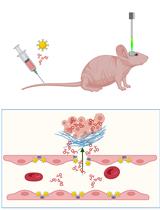
Adaptive behaviors shaped by prior experience are essential for increasing animal survival. Aversive experiences play a pivotal role in memory formation and in updating subsequent learning rules. While the negative value of aversive signals, which are both necessary and sufficient to drive a conditioned response, is considered to be innately specified, it can also be subject to experience-dependent scaling. Previous reports demonstrated synaptic potentiation in nociceptive pathways following robust aversive learning. However, the neuronal basis of experience-dependent value updating remains largely unknown. Recently, we demonstrated that long-term potentiation (LTP) in the parabrachial-central amygdala (PB-CeA) pathway, an important circuit involved in pain processing and aversive learning, enhances the negative value and thereby updates future learning rules. Here, we present a protocol that combines behavioral analysis using pathway-specific optogenetic induction of in vivo LTP with mathematical modeling to examine value modification using Bayesian inference of the unconditioned stimulus value using the Rescorla–Wagner model. This protocol enables investigation of the mechanisms underlying experience-dependent value modulation and learning-rule changes in mice. Potentially, this protocol may provide a framework for understanding learning rules across a wide range of species and for the development of treatments for stress-related disorders.
Key features
• This protocol enables pathway-specific in vivo LTP induction to investigate the causal relationship between synaptic plasticity and behavioral outputs.
• The protocol combines behavioral manipulation with computational modeling to interpret value plasticity of the instructive signal in terms of learning-rule updating via circuit-level plasticity.
Keywords: Plasticity (可塑性) Emotional value (情绪价值)
Learning rule (学习规则)
In vivo LTP (体内 LTP)
Parabrachial-central amygdala (PB-CeA) pathway (臂旁核-中央杏仁核通路)
Rescorla–Wagner model (Rescorla–Wagner 模型)
Mice (小鼠)
Emotional value (情绪价值)
Learning rule (学习规则)
In vivo LTP (体内 LTP)
Parabrachial-central amygdala (PB-CeA) pathway (臂旁核-中央杏仁核通路)
Rescorla–Wagner model (Rescorla–Wagner 模型)
Mice (小鼠)
Background
Adaptive behaviors shaped by past experiences are essential for animal survival, as they enable flexible responses to changing and potentially threatening environments. Noxious stimuli such as pain are commonly used to induce aversive learning and have been extensively studied as instructive signals. Pavlovian threat conditioning is a well-established behavioral paradigm to explore the neural mechanisms underlying associative aversive learning [1–3]. In Pavlovian threat conditioning, sensory signals with negative valence function as an unconditioned stimulus (US) to induce learning when paired with an emotionally neutral conditioned stimulus (CS). Previous studies have shown that the lateral parabrachial nucleus (PB) in the pons receives nociceptive signals from the dorsal horn and sends direct projections to the central amygdala (CeA) [4–6]. This PB-CeA pathway is vital for transmitting aversive signals that act as the US in aversive learning [7–12].
Long-term potentiation (LTP) of synaptic transmission is widely recognized as a fundamental neuronal mechanism that drives learning and memory. Synaptic transmission in the PB-CeA pathway is potentiated in rodent pain models, as well as following repeated exposure to aversive stimuli [13–23]. However, the specific causal role of the LTP within the US pathway, the PB-CeA, in associative aversive learning has remained unclear, leaving its physiological significance in adaptive behavioral regulation unresolved. Recently, we developed pathway-specific in vivo LTP induction methods and mathematical models. Using this approach, we demonstrated that LTP in the PB-CeA pathway enhances negative value and thereby updates future learning rules [24].
Here, we present an efficient protocol to combine optogenetic in vivo LTP induction and mathematical modeling to investigate value plasticity and learning-rule changes in mice. The pathway-specific in vivo LTP protocol enables causal investigation of the relationship between pathway-specific synaptic plasticity in the PB-CeA pathway and behavioral outputs. To construct the mathematical model, the Rescorla–Wagner model [25], a framework that describes associative learning in classical conditioning, was employed. Furthermore, by integrating behavioral data into mathematical models based on the Rescorla–Wagner model, this approach enables investigations of experience-dependent alterations in emotional value and learning rules driven by pathway-specific synaptic plasticity. Accordingly, this protocol may serve as a framework for understanding the value plasticity of the instructive signal in various organisms and for the development of treatments for psychiatric disorders, such as post-traumatic stress disorder (PTSD).
Materials and reagents
Biological materials
1. C57BL/6J mice (Japan SLC, Inc., Shizuoka, Japan)
Note: Purchase male mice (4–5 weeks old) and house them at 3–5 mice per cage in most experiments.
Reagents
1. AAV1-hSyn-Chronos:GFP (approximately 1012 vg/mL, UNC Vector Core, North Carolina, USA, https://www.med.unc.edu/vectorcore/in-stock-aav-vectors/boyden/)
2. AAVDJ-Syn-eYFP (approximately 108 gc/μL, Prof. Toshihisa Ohtsuka, University of Yamanashi, Japan)
Note: Store AAVs at -80 °C.
3. Medetomidine hydrochloride (Zenoaq, Fukushima, Japan)
4. Midazolam (Astellas, Tokyo, Japan, catalog number: 4987211762100)
5. Butorphanol tartrate (Meiji Seika Pharma, Tokyo, Japan)
6. Antisedan (Zenoaq, Fukushima, Japan)
Laboratory supplies
1. Hamilton microsyringe (1701RN Neuros Syringe, 33 G, 10 μL, Hamilton Company, Reno, NV, USA)
2. Microsyringe pump (UMP3; UltraMicroPumpII with SYS-Micro4 Controller, UMP2, UMC4, World Precision Instruments, Sarasota, FL, USA)
3. LED cannula unit (470 nm, TeleLCD-B-4.5-250-6.0, Bio Research Center, Tokyo, Japan); fiber diameter: 0.25 mm; fiber length: 4.5 mm; fiber spacing: 6.0 mm
4. TeleTool (Bio Research Center, Tokyo, Japan)
5. Teleopto-receiver (2 g, TeleR-2-P, an infrared-driven wireless LED unit, Bio Research Center, Tokyo, Japan)
Equipment
1. Sound-attenuating box [600 mm (width) × 450 mm (depth) × 650 mm (height)] (O’Hara & Co., Ltd., model: CL-4212C)
2. Chamber for LTP induction [200 mm (width) × 125 mm (depth) × 110 mm (height)] (Context A) (TOYO-LABO Co., Ltd., model: TP-107A)
3. Conditioning chamber [170 mm (width) × 100 mm (depth) × 100 mm (height)] (Context B) (O’Hara & Co., Ltd., model: CL-3002M)
4. Test chamber [170 mm (width) × 100 mm (depth) × 100 mm (height)] (Context C) (O’Hara & Co., Ltd., model: CLT-3002M)
5. Shock generator (O’Hara & Co., Ltd, model: CL-1010C, SGA-2040)
6. Master-8 (A.M.P.I., Jerusalem, Israel)
7. Infrared-driven remote controller (Teleopto remote controller, Bio Research Center, Tokyo, Japan)
8. Camera for behavioral recording (Watec, model: WAT-902B)
Note: Control the infrared-driven remote controller using a Master-8 during in vivo LTP induction experiments. Set the light stimulation parameters on Master-8 as follows: light pulse width, 5 ms; frequency, 40 Hz; stimulation pattern, 2 s ON/3 s OFF.
Software and datasets
1. TimeFZ4 software (O’Hara & Co., Ltd., Tokyo, Japan, requires a license)
2. Prism 9 software (GraphPad Software, La Jolla, CA, requires a license)
3. Python (Python Software, free to use)
4. The code for the estimation of US values has been deposited to Zenodo: https://doi.org/10.5281/zenodo.15598908
Procedure
登录/注册后免费查看全文
文章信息
稿件历史记录
提交日期: Jan 31, 2026
接收日期: Apr 27, 2026
在线发布日期: May 21, 2026
出版日期: Jun 5, 2026
版权信息
© 2026 The Author(s); This is an open access article under the CC BY-NC license (https://creativecommons.org/licenses/by-nc/4.0/).
如何引用
Nagashima, T., Higashino, I., Arima-Yoshida, F., Hiyoshi, K., Nagase, M., Yada, Y., Naoki, H. and Watabe, A. M. (2026). Optogenetic LTP Manipulation and Mathematical Modeling to Investigate Value Plasticity of the Instructive Signal in Mice. Bio-protocol 16(11): e5714. DOI: 10.21769/BioProtoc.5714.

 Download Citation in RIS Format
分类
神经科学 > 行为神经科学 > 学习和记忆
神经科学 > 基础技术 > 光遗传学
生物信息学与计算生物学
您对这篇实验方案有问题吗?
在此处发布您的问题,我们将邀请本文作者来回答。同时,我们会将您的问题发布到Bio-protocol Exchange,以便寻求社区成员的帮助。
 发布问题
发布问题


