


TALENs and Related Technologies for Editing Nuclear and Organellar Genomes in a Model Plant, Arabidopsis thaliana
TALENs及相关技术在模式植物拟南芥核基因组与细胞器基因组编辑中的应用

发布: 2026年05月05日第16卷第9期 DOI: 10.21769/BioProtoc.5668 浏览次数: 505
评审: Samik BhattacharyaDeepti M NambiarYue Xi
 PDF
PDF  Q&A
Q&A
参见作者原研究论文
The authors used this protocol in:
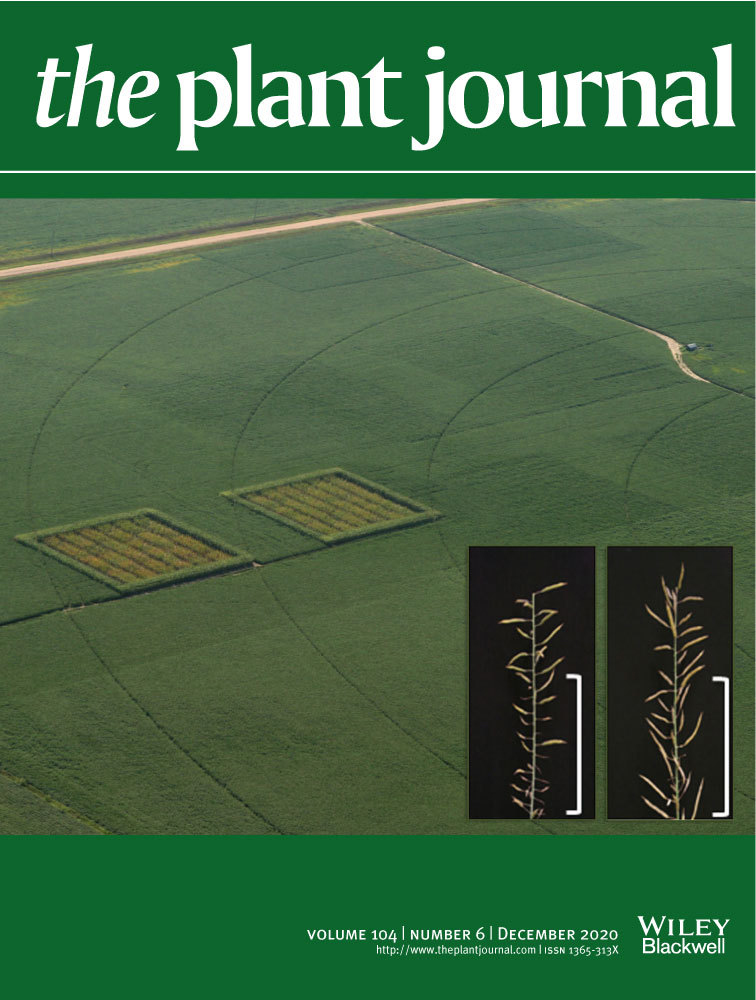
Dec 2020
Advertisement







Abstract
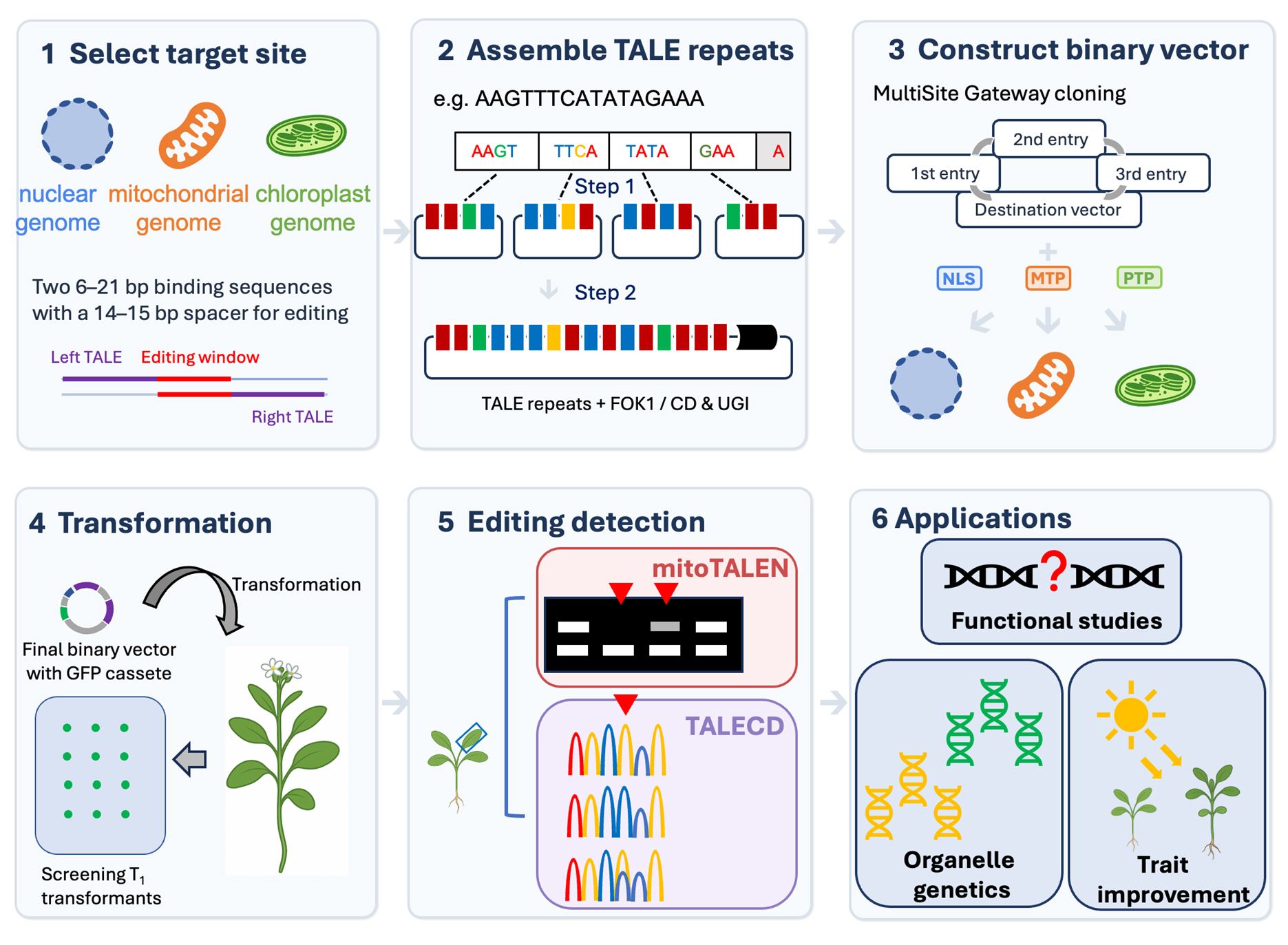
Plant genome editing is a powerful approach for modifying plant DNA to investigate gene function and to engineer desirable traits. Several genome-editing technologies have been developed, among which CRISPR/Cas systems and transcription activator-like effector nucleases (TALENs) are widely used to introduce targeted double-stranded DNA breaks. While CRISPR/Cas systems are highly efficient for nuclear genome editing, their application to plant organellar genomes remains limited, largely due to difficulties in guide RNA delivery into mitochondria and chloroplasts. Here, we present a detailed and reproducible protocol for constructing TALEN-based binary vectors for targeted genome editing in Arabidopsis thaliana. This protocol describes the assembly of TALE repeat arrays, the generation of nuclear-, mitochondrial-, and plastid-targeted TALEN expression vectors using MultiSite Gateway cloning, and subsequent Agrobacterium-mediated plant transformation and genotyping. The workflow enables the production of nTALENs, mitoTALENs, and ptpTALENs using a unified vector design strategy. In addition, the protocol briefly outlines the construction principles of TALE-based cytidine deaminases (TALECDs) for targeted C-to-T base editing in plant organellar genomes. The protocol provides a flexible and robust framework for plant nuclear and organellar genome editing and can be readily adapted to different target genes and experimental purposes. Its modular design and compatibility with standard molecular cloning techniques make it accessible to laboratories aiming to perform precise genome manipulation in plants.
Key features
• Requires experience in basic molecular cloning and Arabidopsis transformation; suitable for laboratories performing plant nuclear and organellar genome editing.
• Enables construction of nuclear-, mitochondrial-, and plastid-targeted TALENs using a unified MultiSite Gateway–based vector system.
• Provides a modular workflow for assembling large TALEN binary vectors compatible with Agrobacterium-mediated transformation in Arabidopsis thaliana.
• Includes optional extension to TALE-based cytidine deaminases for targeted C-to-T base editing in plant mitochondrial and plastid genomes.
Keywords: TALEN (TALEN) Plant genome editing (植物基因组编辑)
Organelle genome editing (细胞器基因组编辑)
Mitochondria (线粒体)
Chloroplast (叶绿体)
Arabidopsis thaliana (拟南芥)
TALECD (TALECD)
Binary vector construction (双元载体构建)
Plant genome editing (植物基因组编辑)
Organelle genome editing (细胞器基因组编辑)
Mitochondria (线粒体)
Chloroplast (叶绿体)
Arabidopsis thaliana (拟南芥)
TALECD (TALECD)
Binary vector construction (双元载体构建)
Graphical overview
Background
Precise manipulation of plant genomes is a central approach for elucidating gene function and for engineering traits of agronomic importance. In plants, in addition to the nuclear genome, mitochondria and chloroplasts possess their own genomes, which play essential roles in energy metabolism, photosynthesis, and organelle–nucleus communication. However, targeted modification of plant organellar genomes has long remained technically challenging, limiting functional studies of organelle-encoded genes.
Several genome-editing technologies have been developed for plant nuclear genomes, among which CRISPR/Cas-based systems are currently the most widely used. Although highly efficient for nuclear genome editing, CRISPR/Cas systems have not yet been successfully applied to plant mitochondrial or chloroplast genomes, largely due to the difficulty of importing guide RNAs into these organelles. In contrast, transcription activator-like effector nucleases (TALENs), which function as programmable DNA-binding proteins fused to a nuclease domain, do not rely on RNA components and can therefore be targeted to plant organelles by appropriate localization signals. TALEN-based approaches have thus emerged as a practical strategy for targeted genome editing in plant mitochondria and plastids.
The protocol described here provides a unified workflow for constructing TALEN-based binary vectors for nuclear, mitochondrial, and plastid genome editing in Arabidopsis thaliana. Compared with previously described TALEN assembly methods, this protocol integrates platinum gate–based TALE repeat assembly with MultiSite Gateway cloning to facilitate the generation of large, modular Ti plasmids suitable for Agrobacterium-mediated transformation. Platinum TALENs use an optimized repeat scaffold that incorporates non-RVD variations (repeatvariable diresidue; the two amino acids in each TALE repeat that specify DNAbase recognition) to improve overall TALEN activity and robustness without changing base recognition. In contrast, conventional Golden Gate TALENs typically assemble largely uniform standard repeats that differ mainly at the RVD positions, which can result in more variable performance. The use of a common vector architecture allows efficient production of nTALENs, mitoTALENs, and ptpTALENs with minimal modification, improving reproducibility and reducing the technical barrier for laboratories aiming to perform organellar genome editing.
Despite these advantages, the protocol also has inherent limitations. TALEN assembly and cloning require multiple molecular cloning steps and careful verification of large plasmids, which can be time-consuming compared with CRISPR/Cas-based approaches for nuclear genome editing. In addition, editing efficiency may vary depending on target sequence features and organelle genome context. Nevertheless, for applications where RNA-guided systems are not feasible, particularly in plant mitochondria and chloroplasts, TALEN-based strategies currently represent one of the most reliable options.
Beyond targeted gene disruption, the modular design of this protocol enables extension to other TALE-based genome engineering tools. In particular, the same framework can be adapted for constructing TALE-based cytidine deaminases (TALECDs) for targeted C-to-T base editing in plant organellar genomes. As a result, this protocol can support a broad range of applications, including functional analysis of organelle-encoded genes, investigation of organellar genome stability, and development of new strategies for organelle genome engineering in plants.
Materials and reagents
Biological materials
1. Arabidopsis thaliana ecotype Columbia-0 (Col-0) (origin: laboratory stock)
2. Agrobacterium tumefaciens strain C58C1 (origin: laboratory stock)
3. Escherichia coli DH5α competent cells (Takara, Japan)
4. Escherichia coli HST08P Premium competent cells (Takara, Japan)
Reagents
1. Platinum Gate TALEN kit (Addgene, catalog number: 1000000043)
2. GatewayTM LR ClonaseTM II enzyme mix (Invitrogen, catalog number: 11791100)
3. Murashige and Skoog (MS) plant salt mixture (Shioya MS Co., Ltd., catalog number: S191)
4. MES [2-(N-morpholino) ethanesulfonic acid] (Dojindo Laboratories Co., Ltd., catalog number: 345-01625)
5. Sucrose (FUJIFILM Wako Pure Chemical Corporation, catalog number: 190-00013)
6. Agar (for plant tissue culture) (FUJIFILM Wako Pure Chemical Corporation, catalog number: 010-15815)
7. Plant preservative mixture (PPM) (Plant Cell Technology, catalog number: PPM-100)
8. Claforan (cefotaxime sodium) (FUJIFILM Wako Pure Chemical Corporation, catalog number: 030-16113)
9. Spectinomycin (Sigma-Aldrich, catalog number: S9007)
10. Kanamycin (FUJIFILM Wako Pure Chemical Corporation, catalog number: 113-00343)
11. Proteinase K solution (Invitrogen, catalog number: 25530049)
12. KOD OneTM PCR master mix (TOYOBO, catalog number: KMM-201X5)
13. Quick Ligation kit (New England Biolabs, catalog number: M2200S)
14. BsaI-HFv2 (New England Biolabs, catalog number: R3733S)
15. Esp3I (BsmBI) (Thermo Fisher Scientific, catalog number: ER0452)
16. IPTG (Isopropyl-β-D‑thiogalactopyranoside), dioxane‑free (TaKaRa, catalog number: 9030)
17. X‑Gal (5-bromo-4-chloro-3-indolyl-β‑D-galactopyranoside) (Free S, catalog number: 510‑620‑G005‑X‑Gal)
18. N,N-dimethylformamide (DMF) (Fujifilm Wako, catalog number: 049‑02914)
19. TangoBuffer (10×) (Thermo Fisher Scientific, catalog number: BY5)
20. (±)-Dithiothreitol (DTT) solution (Fujifilm Wako, catalog number: 044-33871)
Solutions
1. 1/2 Murashige and Skoog (MS) medium (see Recipes)
2. Plant very rapid PCR isolation buffer (see Recipes)
3. LB liquid medium (see Recipes)
4. LB solid medium (see Recipes)
5. SOC medium (see Recipes)
6. Gamborg’s vitamin solution (1,000×) (see Recipes)
7. 0.1 M IPTG solution (see Recipes)
8. 20 mg/mL X-Gal solution (see Recipes)
Recipes
1. 1/2 MS medium
| Reagent | Final concentration | Quantity or volume |
|---|---|---|
| MS plant salt mixture | 2.3 g/L | 2.3 g |
| MES | 0.5 g/L | 0.5 g |
| Sucrose | 10 g/L | 10 g |
| Gamborg’s vitamin solution | 1 mL/L | 1 mL |
| Plant preservative mixture | 1 mL/L | 1 mL |
| Agar | 5 g/L | 5 g |
| Distilled water | n/a | To 1 L |
| Total | n/a | 1 L |
Adjust pH to 5.7 using KOH or HCl before autoclaving. Store prepared medium at 4 °C in the dark and use within 2–4 weeks.
2. Plant very rapid PCR isolation buffer
| Reagent | Final concentration | Quantity or volume |
|---|---|---|
| Tris-HCl (pH 9.5) | 0.1 M | 10 mL of 1 M stock |
| EDTA (pH 8.0) | 5 mM | 0.5 mL of 100 mM stock |
| Distilled water | n/a | to 100 mL |
| Total | n/a | 100 mL |
Store at 4 °C for up to 6 months.
3. LB liquid medium
| Reagent | Final concentration | Quantity or volume |
|---|---|---|
| Tryptone | 10 g/L | 10 g |
| Yeast extract | 5 g/L | 5 g |
| NaCl | 10 g/L | 10 g |
| Distilled water | n/a | to 1 L |
| Total | n/a | 1 L |
Sterilized LB broth can be stored at room temperature or 4 °C and used within 1–3 months.
4. LB solid medium
| Reagent | Final concentration | Quantity or volume |
|---|---|---|
| LB liquid medium | n/a | 1 L |
| Agar | 15 g/L | 15 g |
| Total | n/a | 1 L |
Autoclave and cool to ~55 °C before adding antibiotics if required. Store poured plates at 4 °C (sealed) and use within 2–4 weeks; when antibiotics are added, use within 1–2 weeks.
5. SOC medium
| Reagent | Final concentration | Quantity or volume |
|---|---|---|
| Tryptone | 20 g/L | 20 g |
| Yeast extract | 5 g/L | 5 g |
| NaCl | 10 mM | 0.58 g |
| KCl | 2.5 mM | 0.19 g |
| MgCl2 | 10 mM | 10 mL of 1 M stock |
| MgSO4 | 10 mM | 10 mL of 1M stock |
| Glucose | 20 mM | 3.6 g |
| Distilled water | n/a | To 1 L |
| Total | n/a | 1 L |
Add glucose, MgCl2, and MgSO4 after autoclaving using sterile-filtered stock solutions. Store SOC medium at 4 °C and use within 4 weeks.
6. Gamborg’s vitamin solution (1,000×)
| Reagent | Final concentration | Quantity or volume |
|---|---|---|
| myo-Inositol | 100 g/L | 10 g |
| Glycine | 2 g/L | 200 mg |
| Nicotinic acid | 0.5 g/L | 50 mg |
| Pyridoxine-HCl | 0.5 g/L | 50 mg |
| Thiamine-HCl | 0.1 g/L | 10 mg |
| Distilled water | n/a | To 100 mL |
| Total | n/a | 100 mL |
Filter-sterilize (0.22 μm), aliquot (e.g., 15 mL tubes), and store at -20 °C. Avoid repeated freeze–thaw cycles; aliquots are stable for up to 12 months at -20 °C.
7. 0.1 M IPTG solution
| Reagent | Final concentration | Quantity or volume |
|---|---|---|
| IPTG | 0.1 M | 0.238 g |
| Ultrapure water | n/a | To 10 mL |
| Total | n/a | 10 mL |
Sterilize using a Terumo 10 mL syringe and a Millex-LG 0.20 μm filter in a laminar flow cabinet. Store for ≤6 months at -20 °C.
8. 20 mg/mL X-Gal solution
| Reagent | Final concentration | Quantity or volume |
|---|---|---|
| X-gal | 20 mg/mL | 200 mg |
| DMF | n/a | To 10 mL |
| Total | n/a | 10 mL |
Store for ≤ 6 months at -20 °C.
Laboratory supplies
1. 0.2 mL PCR 8-strip tubes with dome caps (Nippon Genetics Co., Ltd., catalog number: FG-028DC)
2. 0.2 mL PCR single tubes with dome caps (Nippon Genetics Co., Ltd., catalog number: FG-021D)
3. MicroAmpTM Fast 96-well reaction plates (0.1 mL) (Applied Biosystems, catalog number: 4369074)
4. 1.5 mL microcentrifuge tubes (SARSTEDT, catalog number: 72.41154.000)
5. 2.0 mL microcentrifuge tubes (TPP Techno Plastic Products AG, catalog number: 89020)
6. 50 mL conical centrifuge tubes, sterile (CELLSTAR®, Greiner Bio-One, catalog number: 227261)
7. 15 mL conical centrifuge tubes, sterile (CELLSTAR®, Greiner Bio-One, catalog number: 188271)
8. Disposable nitrile gloves (Kawanishi Industry Co., Ltd., QUICK FIT series)
9. Autoclave bags (IWAKI Co., Ltd., catalog number: A-BAG950)
10. Filter pipette tips (10, 200, and 1,000 μL) (Greiner Bio-One, catalog numbers: 771265, 738265, 750265)
11. Terumo syringe 10 mL for vaccination slip tip (TERUMO, catalog number: SS10ESZ)
12. Millex-LG 0.20 μm filter (Merck, catalog number: SLLG025SS)
Equipment
1. Thermal cycler (PCR machine) (Applied Biosystems, Thermo Fisher Scientific, model: MiniAmpTM Plus Thermal Cycler or equivalent)
2. Microcentrifuge (Benchmark Scientific, model: myFugeTM Mini Centrifuge or equivalent)
3. Refrigerated centrifuge (TOMY Seiko Co., Ltd., model: MDX-310 or equivalent)
4. Incubator shaker for bacterial culture (TAITEC Corporation, model: BioShaker BR-43FL or equivalent)
5. Dry incubator for bacterial plate incubation (37 °C) (Yamato Scientific Co., Ltd., model: IC402 or equivalent)
6. Laminar flow hood/clean bench (NK System Co., Ltd. or equivalent)
7. Plant growth chamber (NK System Co., Ltd., model: BioTRON growth chamber or equivalent)
8. Gel electrophoresis system and power supply (ADVANCE Co., Ltd. or equivalent)
9. UV or blue-light transilluminator (ATTO Corporation, model: CyanoView III or equivalent)
10. Stereo fluorescence microscope for screening GFP-positive seeds (Olympus Corporation, MVX10 MacroView fluorescence microscope equipped with a DP73 digital camera and U-RFL-1 fluorescence light source or equivalent)
11. Spectrophotometer for DNA quantification (Thermo Fisher Scientific, model: NanoDropTM One C or equivalent)
12. Autoclave (TOMY Seiko Co., Ltd., model: LSX-500 or equivalent)
Software and datasets
1. Geneious Prime (Biomatters, version 2020 or later; commercial software); https://www.geneious.com (accessed December 29, 2025)
2. BLAST (Basic Local Alignment Search Tool) (National Center for Biotechnology Information; free to use); https://blast.ncbi.nlm.nih.gov/Blast.cgi (accessed December 29, 2025)
3. Old TALEN Targeter (Cornell University; web-based tool; free to use); https://tale-nt.cac.cornell.edu/node/add/talen-old (accessed December 29, 2025)
Procedure
登录/注册后免费查看全文
文章信息
稿件历史记录
提交日期: Jan 14, 2026
接收日期: Mar 19, 2026
在线发布日期: Apr 1, 2026
出版日期: May 5, 2026
版权信息
© 2026 The Author(s); This is an open access article under the CC BY-NC license (https://creativecommons.org/licenses/by-nc/4.0/).
如何引用
Zhou, C. and Arimura, S. (2026). TALENs and Related Technologies for Editing Nuclear and Organellar Genomes in a Model Plant, Arabidopsis thaliana. Bio-protocol 16(9): e5668. DOI: 10.21769/BioProtoc.5668.

 Download Citation in RIS Format
分类
植物科学 > 植物转化 > 农杆菌介导的转化方法
细胞生物学 > 细胞工程 > TALEN技术
分子生物学 > DNA > DNA 克隆
您对这篇实验方案有问题吗?
在此处发布您的问题,我们将邀请本文作者来回答。同时,我们会将您的问题发布到Bio-protocol Exchange,以便寻求社区成员的帮助。
 发布问题
发布问题


