


From Design to Practice: A Comprehensive Tutorial for the Rapid Multiplex Engineering of Escherichia coli Using Antibiotic Resistance Markers
从设计到实践:利用抗生素抗性标记快速进行大肠杆菌多重基因组工程的系统教程

发布: 2026年04月20日第16卷第8期 DOI: 10.21769/BioProtoc.5665 浏览次数: 594
评审: Walmik Karbhari GaikwadAnonymous reviewer(s)
 PDF
PDF  Q&A
Q&A
参见作者原研究论文
The authors used this protocol in:
Sep 2020
Advertisement







Abstract
Engineering of microbial cells, including E. coli, is essential in prototyping genetic designs used in numerous applications throughout synthetic biology. While many advanced genome editing tools, such as CRISPR-based tools, offer new capabilities with genetically recalcitrant organisms, these tools often do not offer an immediate advantage in readily manipulated microbes, such as E. coli, especially when scarless modifications are not critical. We describe a comprehensive recombineering tutorial that we commonly use for multiplex engineering of E. coli using antibiotic markers. We leverage a group of 15 antibiotic resistance cassettes, most of which can be readily included when designing double-stranded DNA donors intended for recombineering and purchased from several vendors. Using these methods, 10–15 defined modifications to a single host strain can be achieved in less than three weeks, using two-day editing cycles. We discuss sequences and protocols as well as the optimal design of genetic modifications and the associated DNA.
Key features
• Enables 10–15 genomic modifications in less than 3 weeks.
• Includes a comprehensive tutorial on designing donor DNA as well as choosing the appropriate antibiotic markers.
• Includes DNA sequences that are amenable to commercial DNA synthesis.
Keywords: Multiplex (多重编辑) Genome engineering (基因组工程)
Editing (基因编辑)
Recombineering (重组工程)
Antibiotics (抗生素)
E. coli (大肠杆菌)
Genome engineering (基因组工程)
Editing (基因编辑)
Recombineering (重组工程)
Antibiotics (抗生素)
E. coli (大肠杆菌)
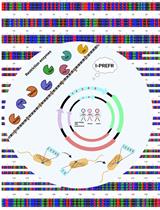
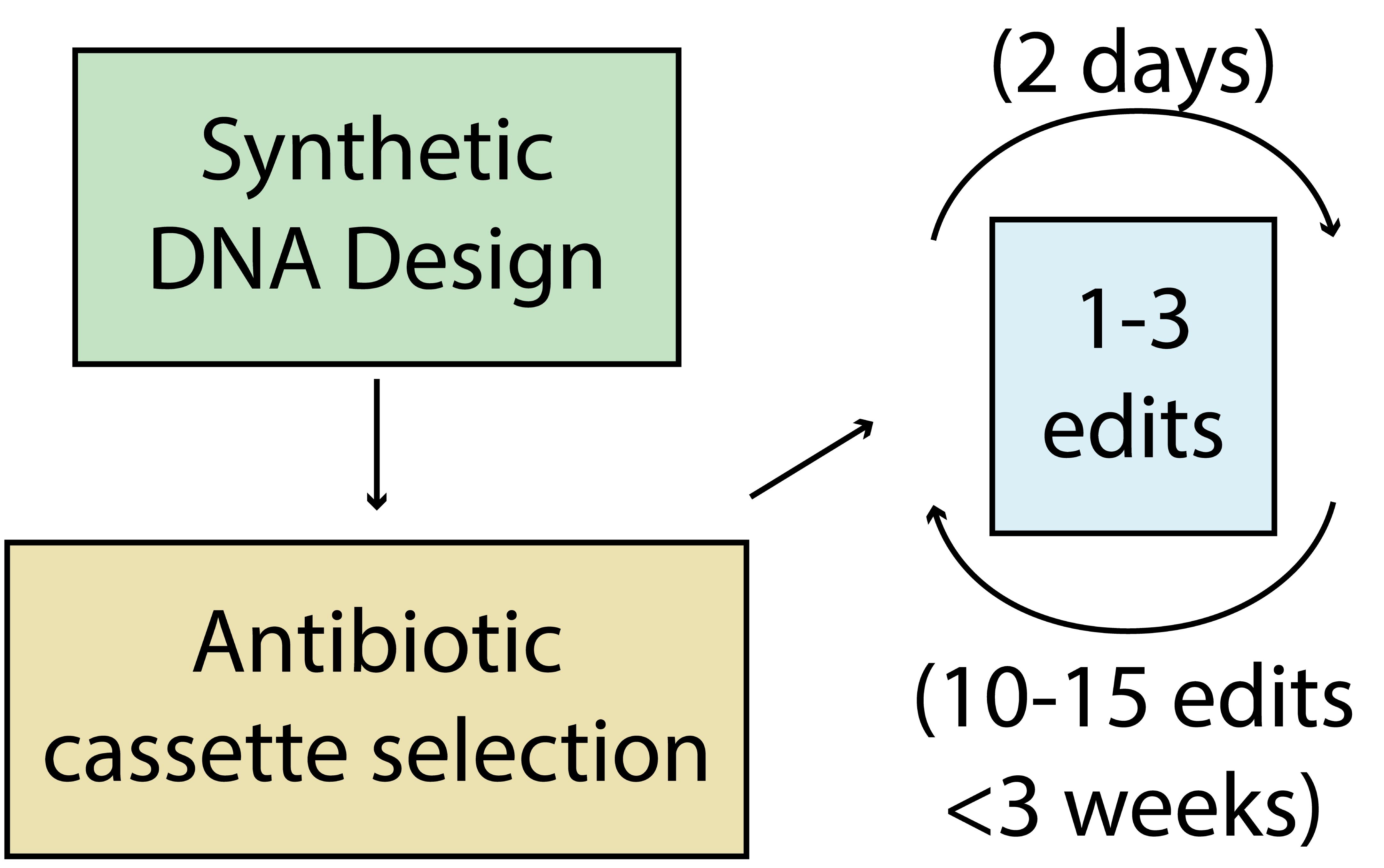
Graphical overview
Background
Genetic manipulation is at the heart of synthetic biology. More complicated genetic designs often require making multiple genetic modifications in parallel in a single cell, or “multiplexing” [1,2]. Many studies in synthetic biology could benefit from, or require, rapid prototyping of these designs. Complex genetic designs are often implemented through a variety of approaches, including the introduction of plasmids as well as chromosomal modifications. The latter toolkit has exploded in recent years since the discovery of CRISPR systems [3]. However, CRISPR/Cas systems require identifying optimal gRNA sequences for each edit and dealing with complexity in cloning and expressing multiple gRNAs, as well as host- and strain-dependent variability [4–6]. In addition, to date, many antibiotic-free multiplexing approaches often require significant colony screening and/or edits to generate an easily selected or screened phenotype [7,8]. Conversely, antibiotic markers enable rapid selection, without the need for significant screening or expression of CRISPR/Cas enzymes and gRNAs. As a result, for many designs, antibiotic markers are still widely used for selection because they can enable a faster pace of editing than newer methods [9–12].
In this tutorial, we walk through recombineering using antibiotic cassettes for engineering E. coli. This includes (1) selection guidelines and sequences of a large group of antibiotic resistance cassettes, readily obtainable via gene synthesis, (2) design criteria for chromosomal modifications intended to minimize polar effects [13], and (3) a detailed recombineering protocol. Using these methods, 10–15 defined modifications to a single host can be achieved in less than 3 weeks, using two-day editing cycles. While this method has been described and vetted in E. coli [14–16], the concepts are readily applicable to other microbial hosts.
Importantly, in addition to the antibiotic marker cassettes discussed here, there are others conferring resistance to a variety of antibiotics, including fluoroquinolones (nalidixic acid, azithromycin), macrolides (erythromycin), doxorubicin, mitomycin C, and others [17–22]. However, we do not recommend their use since many of these are either toxic (even during only handling, such as doxorubicin), reserved for other routine methods (mitomycin used in testing for lysogenic phage, for example), or are antibiotics that are routinely used clinically (fluoroquinolones and macrolides). As antibiotic and reactive resistance is a growing concern [18,23–25], best laboratory biosafety practices and care should be taken in the handling, use, and disposal of all antibiotics and antibiotic-resistant strains [26]. While the use of multiple antibiotic markers can facilitate rapid prototyping in well-controlled laboratory environments, strains with resistance markers are often not allowed in very large-scale commercial applications, where containment is more difficult.
Materials and reagents
Biological materials
1. pSIM-X plasmid; we routinely use pSIM-5 (National Cancer Institute, Bethesda, Maryland, https://ncifrederick.cancer.gov/recombineering/strains-plasmids-and-primers)
2. 2× Taq master mix + dye (Roke Biotechnologies, catalog number: RE-005TMMD400)
Reagents
1. Agar A (BioBasic, catalog number: FB0010)
2. Synthetic double-stranded donor DNA
3. Agarose (Sigma-Aldrich, catalog number: A6013-500G)
4. Tryptone [BioBasic, catalog number: TG217(500g)]
5. Sodium chloride (BioBasic, catalog number: DB0483)
6. Yeast extract (Thermo Fisher, catalog number: 288620)
7. DNA stain Midori green (VWR, catalog number: 102407-968)
8. Apramycin (Sigma-Aldrich, catalog number: A2024-5G)
9. Triclosan (Sigma-Aldrich, catalog number: 72779-5G-F)
10. Gentamicin (Sigma-Aldrich, catalog number: G1264-1G)
11. Tetracycline (Sigma-Aldrich, catalog number: T7660-5G)
12. Chloramphenicol (Sigma-Aldrich, catalog number: C1919-5G)
13. Spectinomycin (Sigma-Aldrich, catalog number: S4014-5G)
14. Kanamycin (Sigma-Aldrich, catalog number: K1377-5G)
15. Ampicillin (Sigma-Aldrich, catalog number: A8351-5G)
16. Trimethoprim (Sigma-Aldrich, catalog number: T7883-5G)
17. Nourseothricin (Sigma-Aldrich, catalog number: N0186-10MG)
18. Tellurite (Sigma-Aldrich, catalog number: 60539-10G)
19. Glycerol (BioBasic, catalog number: GB0232)
20. 2,000× zeocin solution (InVivoGen, catalog number: ant-zn-1)
21. 100× blasticidin solution (InVivoGen, catalog number: ant-bl-1)
22. 80× puromycin solution (InVivoGen, catalog number: ant-pr-1)
23. 500× hygromycin solution (InVivoGen, catalog number: ant-hg-1)
24. DMSO (Sigma-Aldrich, catalog number: D8418-50ML)
25. Ethanol (Lab Alley, catalog number: EAPMB200-1L)
Solutions
1. Luria broth (LB) (see Recipes)
2. Sterile 10% glycerol (see Recipes)
3. Sterile 50% glycerol (see Recipes)
4. LB agar plates (see Recipes)
5. 2,000× apramycin solution (see Recipes)
6. 50,000× triclosan solution (see Recipes)
7. 1,000× gentamicin solution (see Recipes)
8. 1,000× tetracycline solution (see Recipes)
9. 1,000× chloramphenicol solution (see Recipes)
10. 1,000× spectinomycin solution (see Recipes)
11. 1,000× kanamycin solution (see Recipes)
12. 1,000× ampicillin solution (see Recipes)
13. 50× trimethoprim solution (see Recipes)
14. 1,000× nourseothricin solution (see Recipes)
15. 35× tellurite solution (see Recipes)
Recipes
1. LB
| Reagent | Quantity or volume |
|---|---|
| Tryptone | 10 g |
| Sodium chloride | 5 g |
| Yeast extract | 5 g |
| DI/ultrapure water (TOC < 0.500 mg/L) | Fill to 1 L |
a. Autoclave to sterilize at 121 °C for 30 min at 15 psi pressure or higher.
b. Shelf-life < 6 months.
2. Sterile 10% glycerol
| Reagent | Quantity or volume |
|---|---|
| Glycerol | 100 mL |
| DI/ultrapure water (TOC < 0.500 mg/L) | 900 mL |
a. Autoclave to sterilize at 121 °C for 30 min at 15 psi pressure or higher.
b. Shelf-life < 6 months.
3. Sterile 50% glycerol
| Reagent | Quantity or volume |
|---|---|
| Glycerol | 500 mL |
| DI/ultrapure water (TOC < 0.500 mg/L) | 500 mL |
a. Autoclave to sterilize at 121 °C for 30 min at 15 psi pressure or higher.
b. Shelf-life < 6 months.
4. LB agar plates
| Reagent | Quantity or volume |
|---|---|
| Tryptone | 10 g |
| Sodium chloride | 5 g |
| Yeast extract | 5 g |
| Agar A | 15 g |
| DI/ultrapure water (TOC < 0.500 mg/L) | 1,000 mL |
a. Autoclave to sterilize at 121 °C for 30 min at 15 psi pressure or higher.
b. When antibiotics are included, mix them once the solution has cooled down to ~50–60 °C. Antibiotics should be diluted to 1× (working concentration).
c. Pour 20–30 mL of warm solution (~50–60 °C) after autoclaving per Petri dish.
d. Put the lids on the Petri dishes and leave at room temperature for 2 h to solidify.
e. Store at 4 °C and use for up to a month.
5. 2,000× apramycin solution
| Reagent | Quantity or volume |
|---|---|
| Apramycin | 1 g |
| DI/ultrapure water (TOC < 0.500 mg/L) | 10 mL |
a. Sterilize using a 10 mL sterile syringe with a syringe filter.
b. Store at -20 °C. Shelf-life < 1 year.
6. 50,000× triclosan solution
| Reagent | Quantity or volume |
|---|---|
| Triclosan | 140 mg |
| DMSO | 10 mL |
a. Sterilize using a 10 mL sterile syringe with a syringe filter.
b. Store at -20 °C. Shelf-life < 1 year.
7. 1,000× gentamicin solution
| Reagent | Quantity or volume |
|---|---|
| Gentamicin | 200 mg |
| DI/ultrapure water (TOC < 0.500 mg/L) | 10 mL |
a. Sterilize using a 10 mL sterile syringe with a syringe filter.
b. Store at -20 °C. Shelf-life < 1 year.
8. 1,000× tetracycline solution
| Reagent | Quantity or volume |
|---|---|
| Tetracycline | 100 mg |
| Ethanol | 7 mL |
| DI/ultrapure water (TOC < 0.500 mg/L) | 3 mL |
a. Sterilize using a 10 mL sterile syringe with a syringe filter.
b. Store at -20 °C. Shelf-life < 1 year.
9. 1,000× chloramphenicol solution
| Reagent | Quantity or volume |
|---|---|
| Chloramphenicol | 350 mg |
| Ethanol | 7 mL |
| DI/ultrapure water (TOC < 0.500 mg/L) | 3 mL |
a. Sterilize using a 10 mL sterile syringe with a syringe filter.
b. Store at -20 °C. Shelf-life < 1 year.
10. 1,000× spectinomycin solution
| Reagent | Quantity or volume |
|---|---|
| Spectinomycin | 500 mg |
| DI/ultrapure water (TOC < 0.500 mg/L) | 10 mL |
a. Sterilize using a 10 mL sterile syringe with a syringe filter.
b. Store at -20 °C. Shelf-life < 1 year.
11. 1,000× kanamycin solution
| Reagent | Quantity or volume |
|---|---|
| Kanamycin | 350 mg |
| DI/ultrapure water (TOC < 0.500 mg/L) | 10 mL |
a. Sterilize using a 10 mL sterile syringe with a syringe filter.
b. Store at -20 °C. Shelf-life < 1 year.
12. 1,000× ampicillin solution
| Reagent | Quantity or volume |
|---|---|
| Ampicillin | 1 g |
| DI/ultrapure water (TOC < 0.500 mg/L) | 10 mL |
a. Sterilize using a 10 mL sterile syringe with a syringe filter.
b. Store at -20 °C. Shelf-life < 1 year.
13. 50× trimethoprim solution
| Reagent | Quantity or volume |
|---|---|
| Trimethoprim | 100 mg |
| DMSO | 10 mL |
a. Sterilize using a 10 mL sterile syringe with a syringe filter.
b. Store at -20 °C. Shelf-life < 1 year.
14. 1,000× nourseothricin solution
| Reagent | Quantity or volume |
|---|---|
| Nourseothricin | 1 g |
| DMSO | 10 mL |
a. Sterilize using a 10 mL sterile syringe with a syringe filter.
b. Store at -20 °C. Shelf-life < 1 year.
15. 35× tellurite solution
| Reagent | Quantity or volume |
|---|---|
| Tellurite | 17.4 mg |
| DMSO | 10 mL |
a. Sterilize using a 10 mL sterile syringe with a syringe filter.
b. Store at -20 °C. Shelf-life < 1 year.
Laboratory supplies
1. 16 mL culture tubes (Genesee Scientific, catalog number: 21-130)
2. 50 mL conical tubes (Genesee Scientific, catalog number: 28-108)
3. 1 L media bottles (VWR, catalog number: 10754-820)
4. 250 mL Erlenmeyer flasks (VWR, catalog number: 10536-914)
5. 10 mL serological pipets (Genesee Scientific, catalog number: 12-104)
6. 25 mL serological pipets (Genesee Scientific, catalog number: 12-106)
7. Electroporation cuvettes (1 mm gap width) (Genesee Scientific, catalog number: 40-100)
8. Petri dish for agar plates (100 mm × 15 mm) (VWR, catalog number: 10416-320)
9. 10 μL pipette tips (Genesee Scientific, catalog number: 23-121RLC)
10. 200 μL pipette tips (Genesee Scientific, catalog number: 23-150RLC)
11. 1,000 μL pipette tips (Genesee Scientific, catalog number: 23-165RLC)
12. 10 mL sterile syringe (VWR, catalog number: 75846-756)
13. Syringe filter (0.2 μm) (Genesee Scientific, catalog number: 25-244)
14. 1.7 mL microcentrifuge tubes (Genesee Scientific, catalog number: 24-281)
Equipment
1. Pipette controller (Eppendorf, model: 4430000018)
2. Incubator shaker (Kuhner, model: LT-X)
3. Benchtop centrifuge (Thermo Scientific, model: Legend XTR)
4. -80 °C freezer (Thermo Scientific, model: TSX700)
5. Microcentrifuge (Eppendorf, model: 5415R)
6. Electroporator (BTX, model: ECM 630)
7. Thermocycler (Bulldog Bio, model: LifeECO)
Procedure
登录/注册后免费查看全文
文章信息
稿件历史记录
提交日期: May 10, 2024
接收日期: Mar 11, 2026
在线发布日期: Apr 3, 2026
出版日期: Apr 20, 2026
版权信息
© 2026 The Author(s); This is an open access article under the CC BY-NC license (https://creativecommons.org/licenses/by-nc/4.0/).
如何引用
Munot, S., Li, S., Hennigan, J. N., Moreb, E. A., Lynch, M. D. and Menacho-Melgar, R. (2026). From Design to Practice: A Comprehensive Tutorial for the Rapid Multiplex Engineering of Escherichia coli Using Antibiotic Resistance Markers. Bio-protocol 16(8): e5665. DOI: 10.21769/BioProtoc.5665.

 Download Citation in RIS Format
分类
生物工程 > 合成生物学 > 基因修饰
分子生物学 > DNA > 染色体工程
微生物学 > 微生物遗传学 > 基因组编辑
您对这篇实验方案有问题吗?
在此处发布您的问题,我们将邀请本文作者来回答。同时,我们会将您的问题发布到Bio-protocol Exchange,以便寻求社区成员的帮助。
 发布问题
发布问题


