


Development and Application of a Fully Blind Flexible Peptide-protein Docking Protocol, pepATTRACT
全盲柔性肽-蛋白对接实验方法pepATTRACT的开发和应用


发布: 2016年06月05日第6卷第11期 DOI: 10.21769/BioProtoc.1831 浏览次数: 9588
评审: Arsalan DaudiPrashanth SuravajhalaMichael Tscherner
 PDF
 Q&A

参见作者原研究论文
The authors used this protocol in:
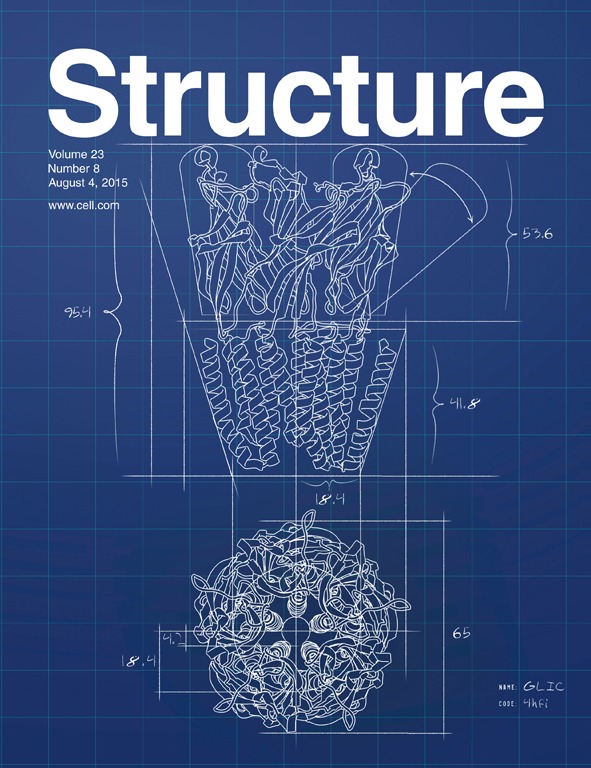
Aug 2015




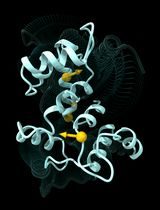
Abstract
Peptide-mediated interactions are involved in many signaling and regulatory pathways as well as the DNA replication machinery and are linked to many pathological disorders. Many research groups are currently working towards a more detailed understanding of these important interactions by characterizing the 3D complex structures with experimental methods like X-ray crystallography and NMR. However, for a large number of peptide-protein complexes such atomistic structural information is lacking to date. Computational peptide docking methods can yield information complementary to experimental information by predicting the protein-peptide complex structure from the 3D structure of the protein and the peptide sequence. This approach can also be used to study interactions between folded and disordered proteins/protein regions (e.g., the interactions of the disordered regions in tumor suppressor p53 with its different partners). Here, we describe the development and usage of the fully blind, flexible peptide-protein docking protocol pepATTRACT. The ATTRACT docking engine is implemented as a suite of command line tools and options that can be combined at will. Therefore, ATTRACT protocols like pepATTRACT are typically invoked via a custom, hand-written shell script. Although this approach is very flexible, it limits the accessibility of ATTRACT to expert users only. To make pepATTRACT easily accessible to non-expert users, we created a web-interface which helps the user set up a peptide docking protocol by editing parameters in a web browser (www.attract.ph.tum.de/peptide.html). pepATTRACT docking scripts can then executed on the user's local machine, once the ATTRACT software has been installed. Here, we describe all the steps necessary for setting up a pepATTRACT docking run via the web-interface including installation of the ATTRACT software.
Keywords: Protein-peptide interaction (蛋白肽的相互作用) Disordered protein binding (无序蛋白结合)
Protein-peptide complex structure (蛋白质肽复合物结构)
Peptide binding prediction (肽结合预测)
Binding site prediction (结合位点预测)
Materials and Reagents
- Atomic 3D structure of protein of interest in PDB file format (www.pdb.org)
- Sequence of peptide of interest in one-letter code
Note: The protocol was tested on peptide lengths of up to 15 residues. - Optional: information on protein residues involved in binding (literature research)
Equipment
- Any computer with Unix-based OS (Linux/Mac) and at least 2-3 GB RAM
Note: It should be sufficient to run the protocol.
Software
- ATTRACT software
- ATTRACT source code (available at www.attract.ph.tum.de/services/ATTRACT/attract.tgz)
- ATTRACT virtual machine (VM) ( www.attract.ph.tum.de/services/ATTRACT/ATTRACT.vdi.gz)
- Molecular viewer (PyMOL, VMD, Rasmol etc.)
- VirtualBox (www.virtualbox.org)
Procedure
登录/注册后免费查看全文
文章信息
版权信息
© 2016 The Authors; exclusive licensee Bio-protocol LLC.
如何引用
Schindler, C. E., de Vries, S. J. and Zacharias, M. (2016). Development and Application of a Fully Blind Flexible Peptide-protein Docking Protocol, pepATTRACT. Bio-protocol 6(11): e1831. DOI: 10.21769/BioProtoc.1831.

 Download Citation in RIS Format
分类
生物化学 > 蛋白质 > 结构
您对这篇实验方案有问题吗?
在此处发布您的问题,我们将邀请本文作者来回答。同时,我们会将您的问题发布到Bio-protocol Exchange,以便寻求社区成员的帮助。
 发布问题


